



Musa ensete 'Maurelli' (Abyssinian red banana) — H70-90 cm | Pot Ø21 cm
- Regular price
-
€50,95 - Regular price
-
- Sale price
-
€50,95
Couldn't load pickup availability
Frequently Asked Questions
Does the red Abyssinian banana produce suckers? No, unlike other banana trees, it does not produce offshoots: the plant forms a single massive specimen.
How do you overwinter Musa ensete? By bringing it indoors, protected from frost, once temperatures reach 5 °C, in a cool, bright place with very infrequent watering.
SHIPPING & PACKAGING
Shipping within 24/48 hours via DPD
- Delivery in 2 to 5 business days
- Eco-friendly packaging: recyclable boxes and biodegradable materials
- Special protection to ensure the plant arrives in perfect condition
- Parcel tracking sent by email as soon as shipped
- Free delivery on orders over €50
48H QUALITY GUARANTEE
We guarantee that your plants will arrive in perfect condition. If your plant arrives damaged or in poor condition:
- Contact us within 48 hours at hello@verdeia.eu with photos
- Free replacement or full refund
- No return necessary – we trust you
The guarantee covers: damage related to transport, severely weakened plant upon arrival, preparation errors.
CARE TIPS UPON ARRIVAL
To help your plant settle in for the long term:
- Unpack immediately and inspect your plant
- Let it acclimatize 24-48h in a bright spot without direct sunlight
- Check soil moisture before watering (dry surface = light watering)
- Wait 2-3 weeks before repotting
- Avoid heat sources and drafts
- Gently wipe leaves to remove dust
Need help? Contact our team at hello@verdeia.eu or via chat.
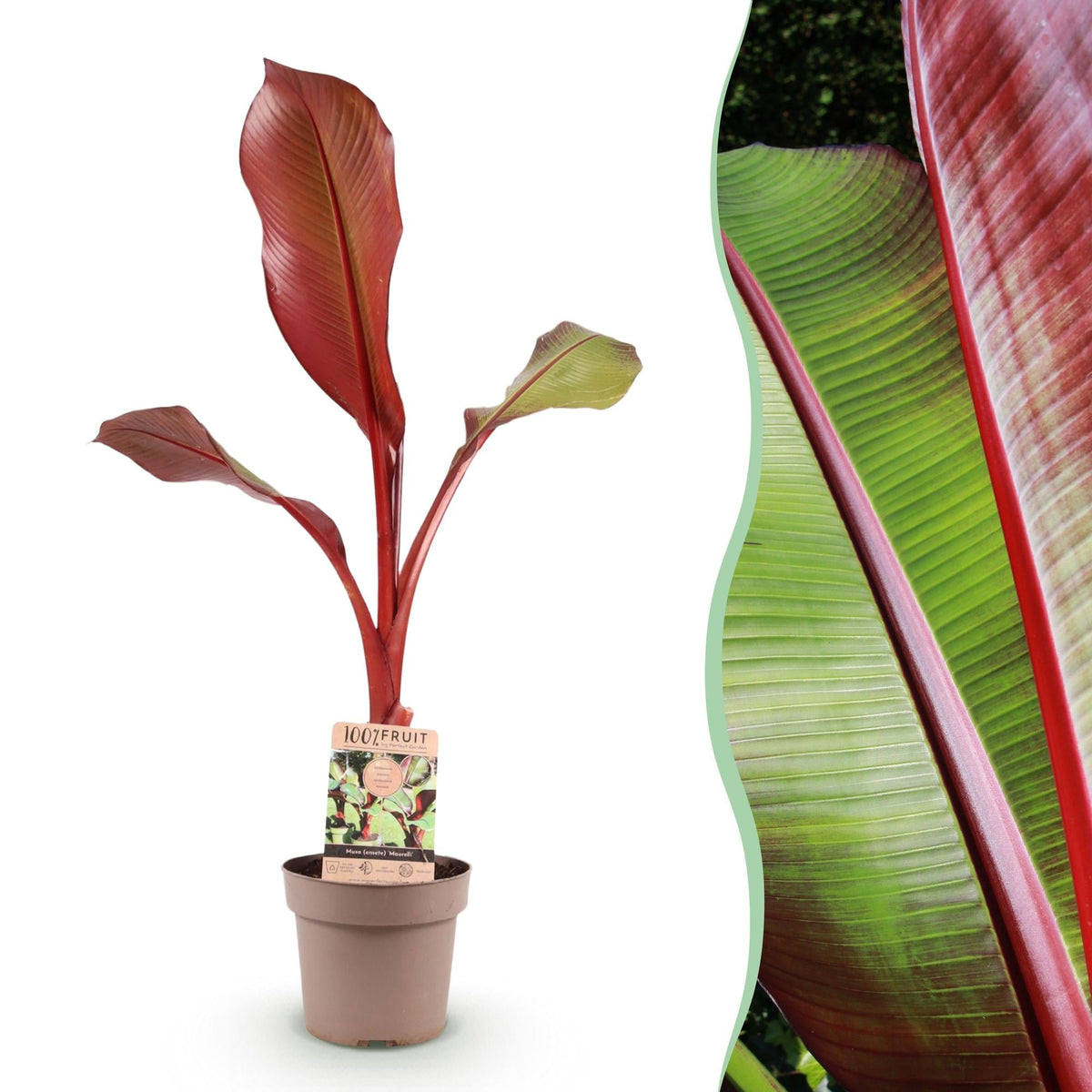
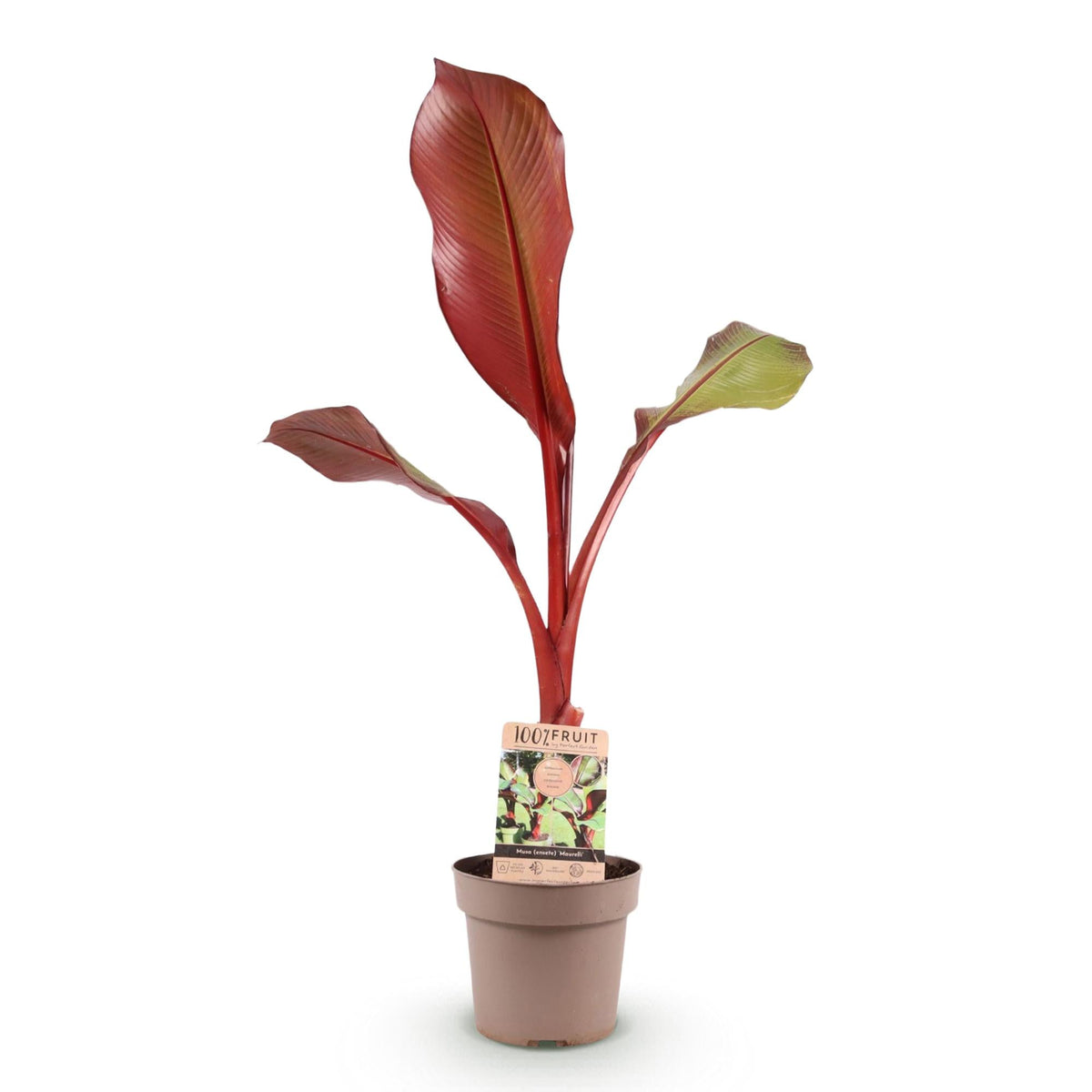
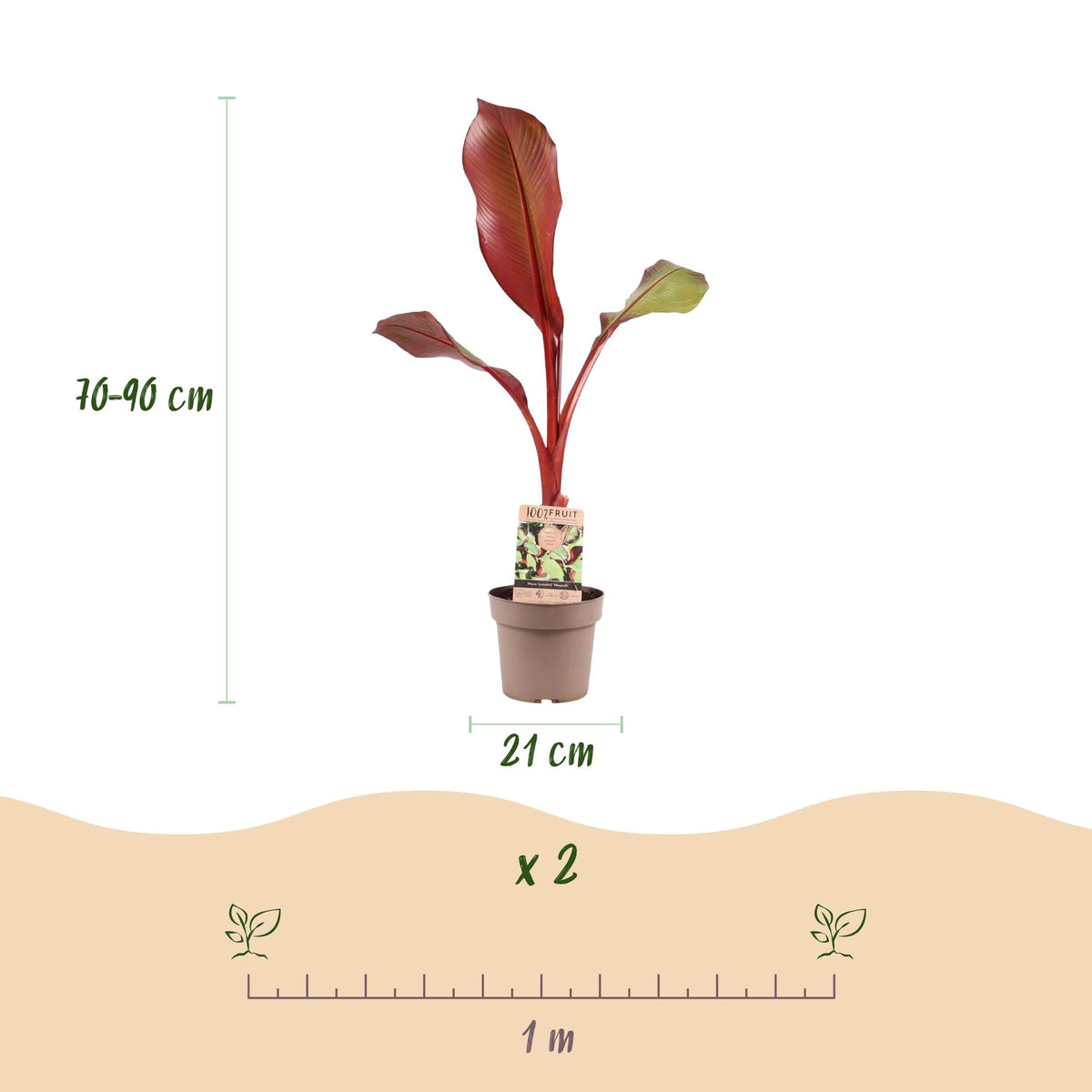
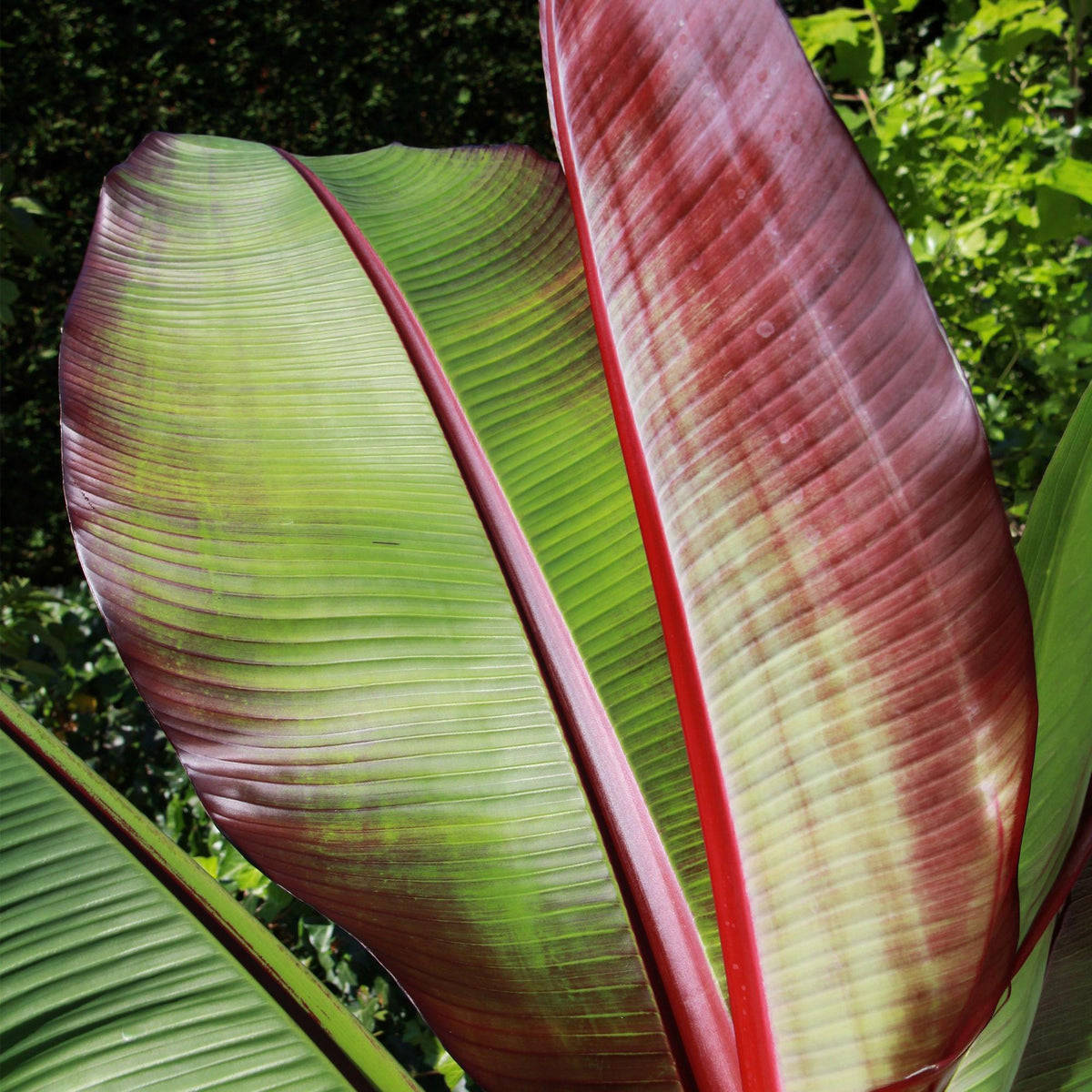
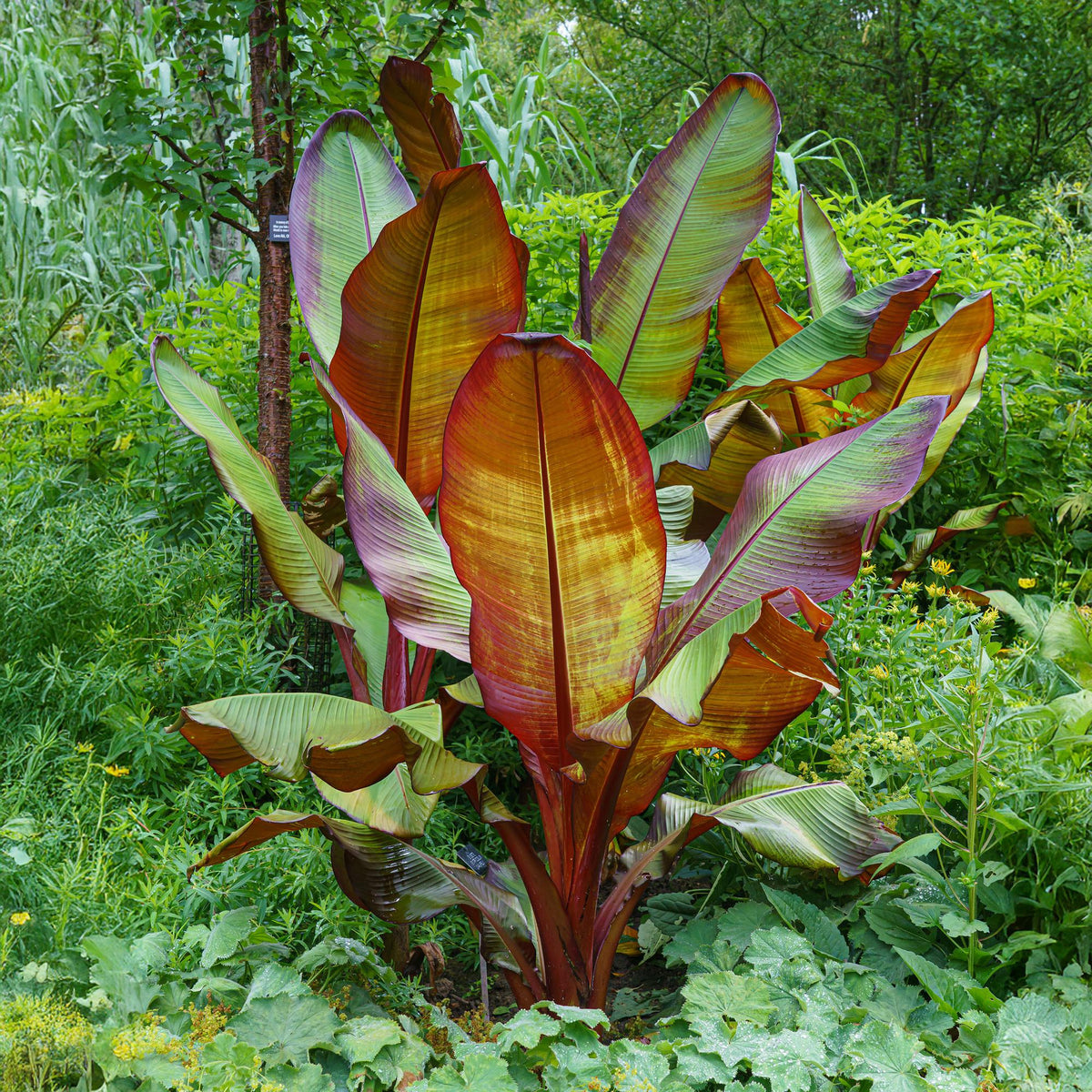

🩸 Blood-red pseudostem and veins • 🌿 Huge upright leaves • 🌴 Spectacular massive growth • ☀️ Full sun • 🏠 Overwinter frost-free • 🐾 Non-toxic
Musa ensete 'Maurelli', or red Abyssinian banana, bears enormous upright, deep green leaves whose central vein and pseudostem are blood red. Native to the highlands of Ethiopia, it is the largest of the catalog's exotic plants.
Its distinctive feature is its growth habit: where true banana plants spread their leaves in an arch, ensete holds them almost vertically on a pseudostem that thickens into a barrel shape. It produces no suckers, creating a single, massive specimen that can reach 3 meters in a single season.
Which banana plant should you choose?
Six banana plants in the catalog, from a desk-sized plant to a terrace tree:
- Musa ensete 'Maurelli' (this plant) - blood-red pseudostem and veins, massive upright growth (H70-90 cm | Pot Ø21 cm). The most spectacular.
- Musa 'Ever Red' - burgundy-red undersides of the leaves, compact growth (H70-90 cm | Pot Ø21 cm). The most colorful indoors.
- Musa basjoo - soft green foliage, hardy rootstock down to -12 °C (H70-90 cm | Pot Ø21 cm). The only one that can be grown outdoors year-round.
- Musa acuminata 'Dwarf Cavendish' - dwarf banana plant with young leaves marbled brown-purple, reaching a maximum height of 1.50 m (H75 cm | Pot Ø21 cm). The most compact of the large sizes.
- Musa 'Oriental Dwarf' - dwarf indoor banana plant (H25 cm | Pot Ø12 cm). The smallest size.
- Musa tropicana - large arched leaves on a young plant (H27 cm | Pot Ø12 cm). The most affordable.
Ensete is not a true Musa but a related genus: it does not produce suckers and dies after flowering, which only occurs after many years.
Exposure & location
Ensete requires full sun to develop the red color of its pseudostem and veins. In the shade, the plant grows green and loses most of its appeal.
- Exposure: full sun - at least 6 hours of direct sun, which intensifies the red color.
- Location: terrace, patio, large balcony in the warm season - absolutely protected from the wind, as its upright leaves act like sails.
- Temperature: minimum 5 °C — bring it indoors as soon as autumn arrives; it cannot tolerate frost.
- Soil type: very rich, deep and moist — it is the hungriest plant in the catalogue.
Plan where to bring it indoors before buying it: by the end of its first season, a well-fed ensete already occupies two square meters of floor space.
Watering & care
Ensete growth is explosive, and its water consumption is proportional: it can produce one leaf per week in midsummer. A rich, water-retentive substrate is essential, and browning leaf edges almost always indicate a lack of water.
- Watering: very generously from April to September — daily in hot weather; the substrate must never dry out. Greatly reduced during overwintering.
- Drainage: essential nonetheless — plenty of water in season, but no standing water in winter.
- Fertilizing: every week from May to August — no other plant in the catalogue needs as much.
- Repotting: every spring, significantly increasing the pot size — a pot that is too small immediately restricts growth.
- Overwintering: a cool, bright place at 10-15 °C, very infrequent watering, with damaged leaves cut back in spring.
Unlike other banana plants, it produces no offsets: it cannot be propagated by division, and a lost plant cannot be replaced.
Decor ideas & plant pairings
This is the plant to place alone at the center of a terrace: its mass and red color are enough to create a complete tropical atmosphere without any accompaniment.
- For a banana plant contrast, pair it with Musa basjoo — arched soft green against upright blood red, two contrasting forms in the same family.
- To lighten its mass, place a Fargesia Rufa next to it — the bamboo’s delicacy balances the heaviness of the ensete leaves.
- To extend the red, add a ‘Bloodgood’ Maple — the maple’s purple echoes the red of the pseudostem, in two very different registers.
- To enhance the pot, a large dark container made of ceramic or terracotta visually anchors a plant that quickly becomes tall and unbalanced.
Backlit, the red of the veins shines through the leaf blade and reveals the entire structure of each leaf.
Verdeia tips
- Plan for its size before buying: the ensete grows more than a metre per season and cannot be pruned to contain it. Without a frost-free space high enough to overwinter it, the plant will be lost at the first frost.
- Feed it every week in summer: it is the hungriest plant in the catalogue. Weekly feeding from May to August completely changes the size of the leaves and the intensity of the red.
- Move it outdoors gradually in spring: a plant overwintered indoors will burn in a single afternoon if moved directly into full sun. Fifteen days of acclimatization in the shade prevent irreversible damage to the foliage.
Technical specifications
- Botanical name: Ensete ventricosum 'Maurelii'
- Common name: Abyssinian red banana
- Family: Musaceae
- Origin: Ethiopian highlands
- Size on delivery: H70-90 cm | Pot Ø21 cm
- Growth habit: massive, with a thick stem and upright leaves
- Adult height: 2 to 3 metres in a pot, taller when planted in the ground in a mild climate
- Exposure: full sun, sheltered from the wind
- Watering: very abundant in season, greatly reduced during overwintering
- Soil type: very rich, deep, and moist
- Temperature: minimum 5 °C, does not tolerate frost
- Growth: very fast, up to one leaf per week in summer
- Foliage: evergreen when kept frost-free, with immense upright deep green leaves featuring blood-red veins
- Propagation: none — the plant does not produce offsets
- Care: very frequent watering and fertilization, frost-free overwintering required
- Toxicity: 🐾 non-toxic to animals and children
- Decorative style: Tropical / Jungle / Spectacular
Each plant is unique: the height of the stem, the number of leaves, and the intensity of the red naturally vary depending on the exposure it receives.

Your plant, delivered with care
Every plant is hand-packed in a box specially designed for plants — secured, protected, ready to travel. It arrives in perfect condition, roots intact and foliage preserved, ready to take its place in your home.
Our Verdeia commitments
FAQ – Everything to know before adopting your Verdeia plant
How are my plants prepared before shipping?
All our plants are selected from our European partner nurseries. Before shipping, they are watered, cleaned, and protected with breathable, secure packaging. Each package is designed to ensure your plant arrives in perfect health, without any transport-related stress.
Will the plant look exactly like the photo?
The photos accurately represent the variety and the stated size. Since each plant is unique, slight differences in shape, foliage, or color may occur — and that’s part of their charm.
What are the delivery times and conditions?
Shipping is done within 48 business hours, with tracked delivery within 2 to 5 business days. Delivery costs €5.60 — free for orders over €50. You will receive a tracking link as soon as the package is shipped.
What to do upon receiving my plant?
Open your package as soon as you receive it and carefully remove the plant from its packaging. Let it acclimate for 24 hours in its new environment before watering. If it has been slightly stressed during transport, it will recover its shape after one or two days in the light.
What to do if my plant arrives damaged?
Contact us within 48 hours with a photo of the issue. Our team will assess the situation and offer you the best solution: replacement, partial refund, or recovery advice.
Can I return a plant?
Since plants are living beings, standard returns are not possible. However, we guarantee good health upon delivery: if the plant arrives damaged, it will be replaced free of charge. For any other cases (order error, decorative pot, accessory), returns are possible within 14 days.