



Musa 'Ever Red' (red-foliage banana tree) — H70-90 cm | Pot Ø21 cm
- Regular price
-
€49,95 - Regular price
-
- Sale price
-
€49,95
Couldn't load pickup availability
Frequently Asked Questions
Can an Ever Red banana plant be kept outdoors in winter? No, it must be brought indoors and kept frost-free as soon as temperatures drop below 5 °C.
Why are my banana plant's new leaves greener? The red develops with light: insufficient light reduces the coloration of the undersides.
SHIPPING & PACKAGING
Shipping within 24/48 hours via DPD
- Delivery in 2 to 5 business days
- Eco-friendly packaging: recyclable boxes and biodegradable materials
- Special protection to ensure the plant arrives in perfect condition
- Parcel tracking sent by email as soon as shipped
- Free delivery on orders over €50
48H QUALITY GUARANTEE
We guarantee that your plants will arrive in perfect condition. If your plant arrives damaged or in poor condition:
- Contact us within 48 hours at hello@verdeia.eu with photos
- Free replacement or full refund
- No return necessary – we trust you
The guarantee covers: damage related to transport, severely weakened plant upon arrival, preparation errors.
CARE TIPS UPON ARRIVAL
To help your plant settle in for the long term:
- Unpack immediately and inspect your plant
- Let it acclimatize 24-48h in a bright spot without direct sunlight
- Check soil moisture before watering (dry surface = light watering)
- Wait 2-3 weeks before repotting
- Avoid heat sources and drafts
- Gently wipe leaves to remove dust
Need help? Contact our team at hello@verdeia.eu or via chat.
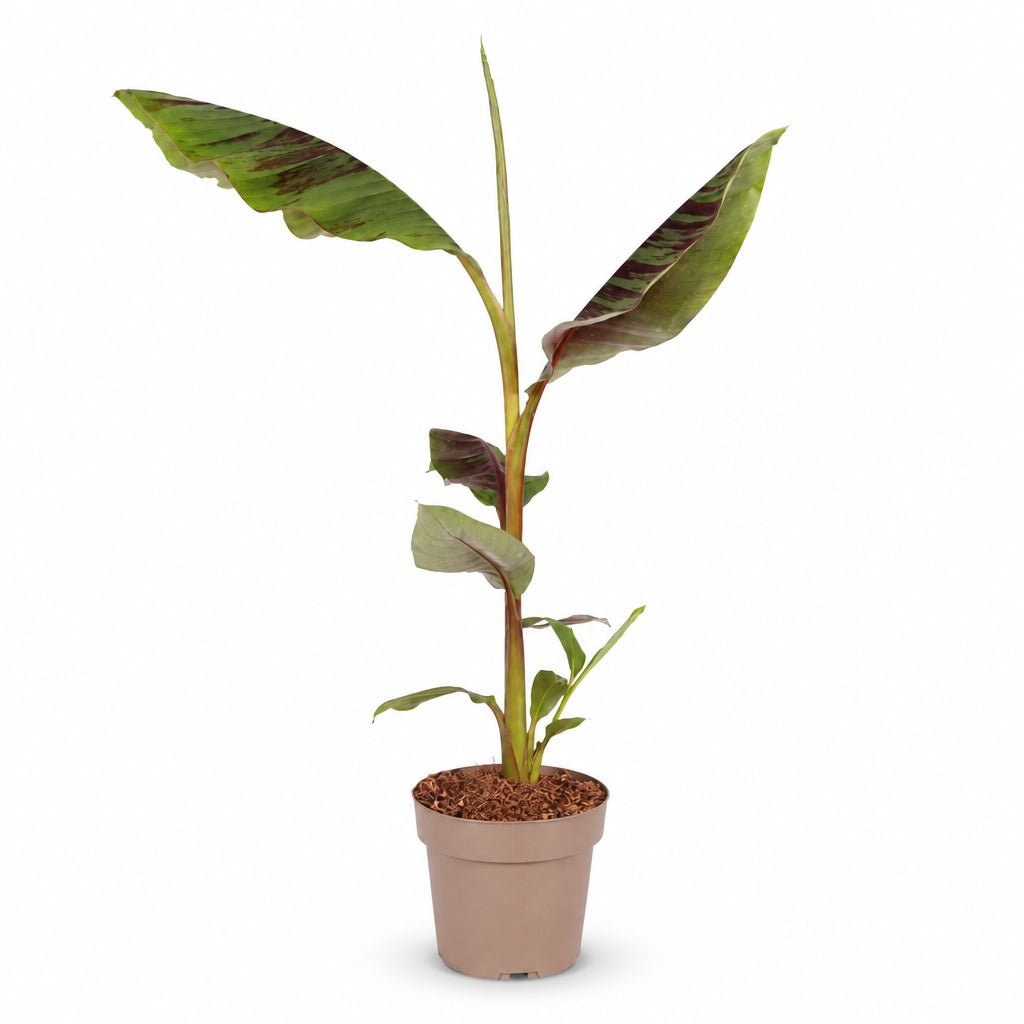
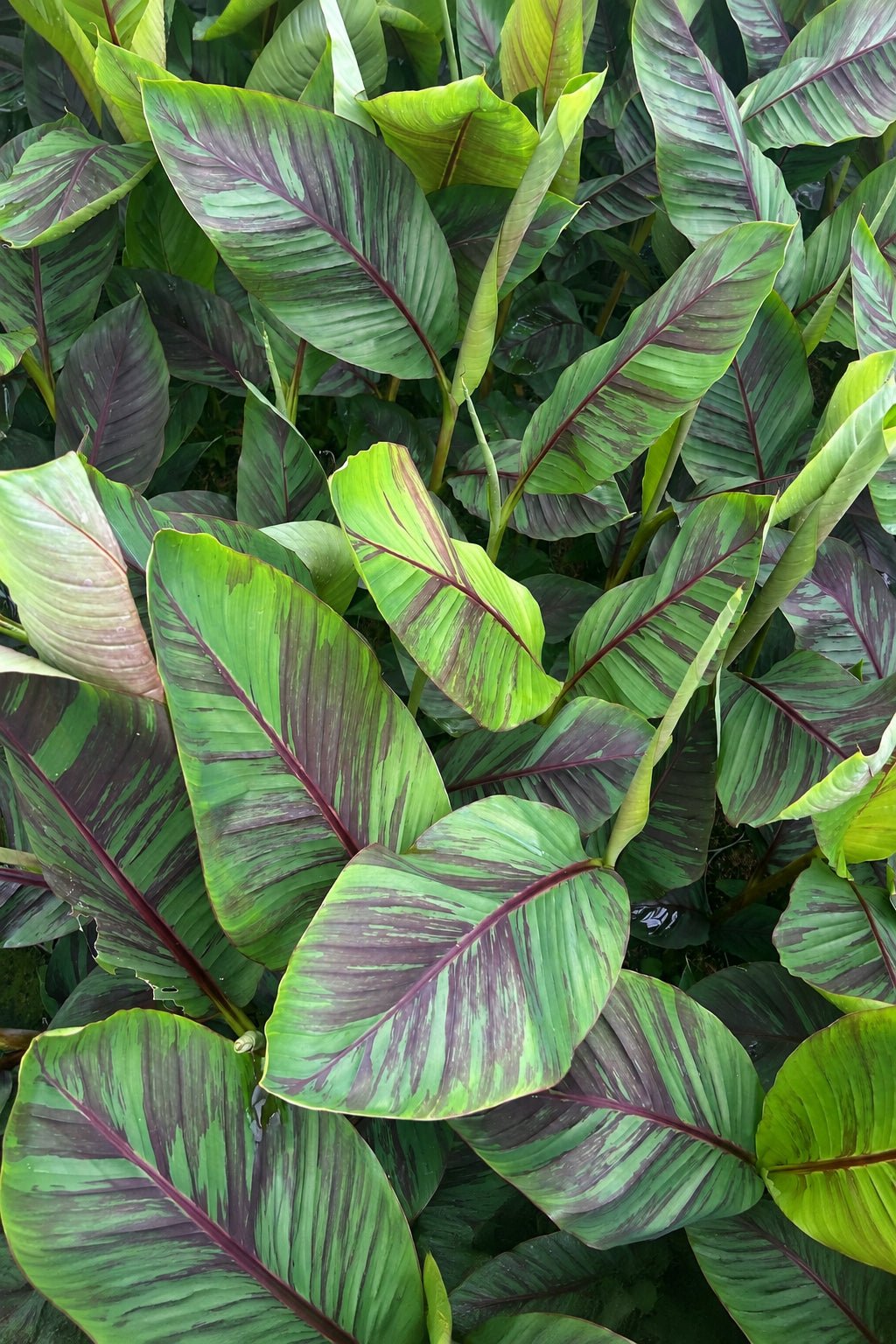
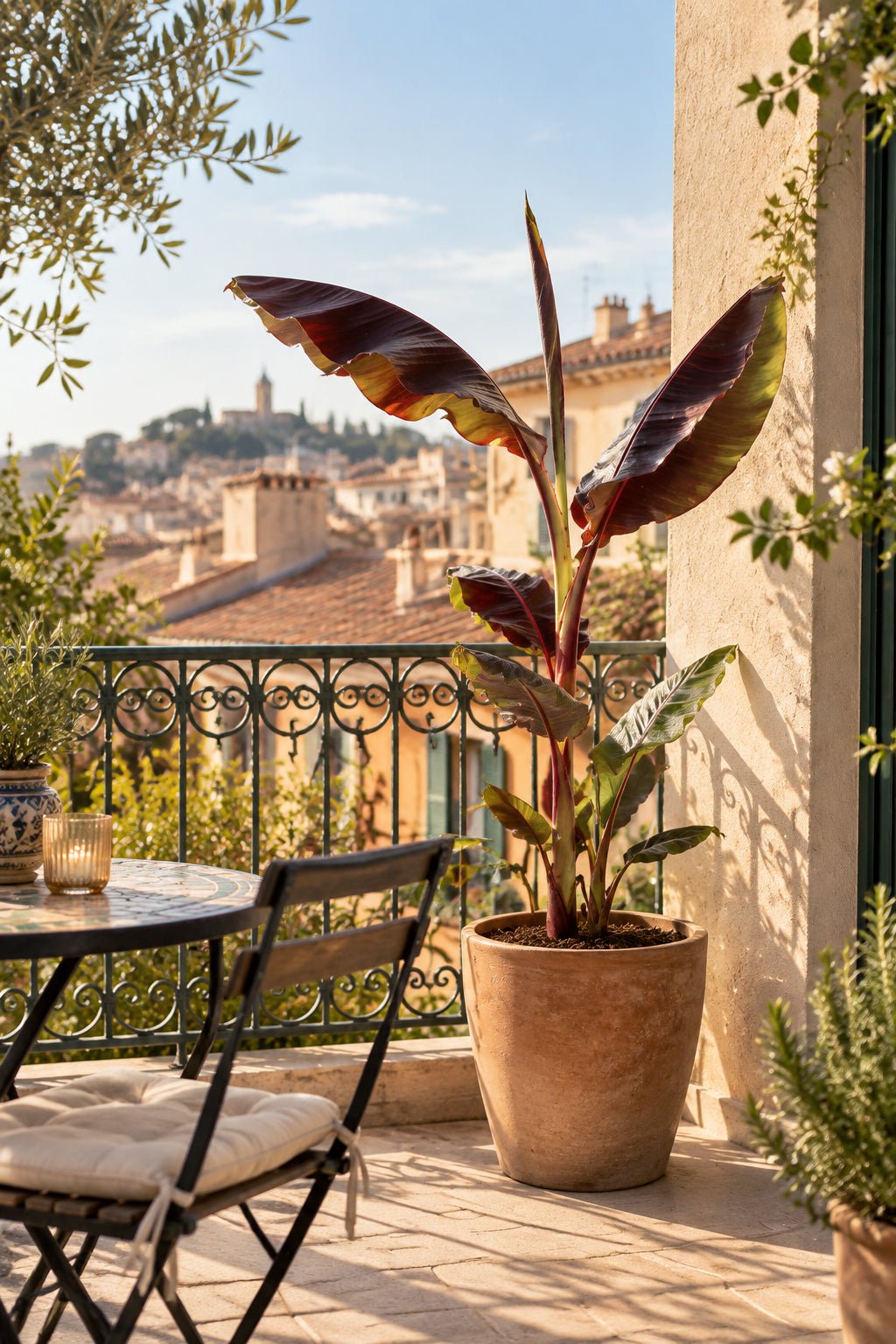
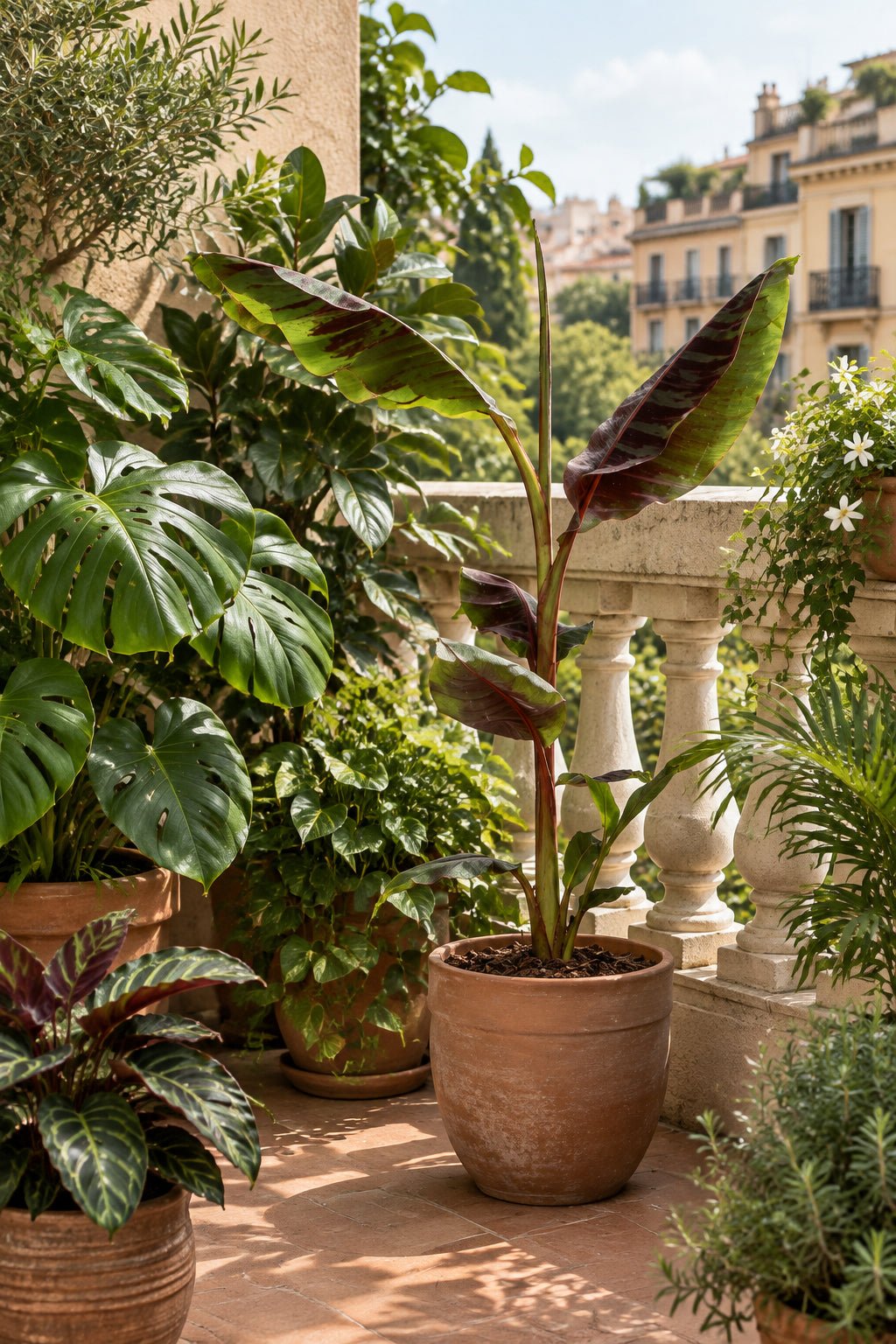
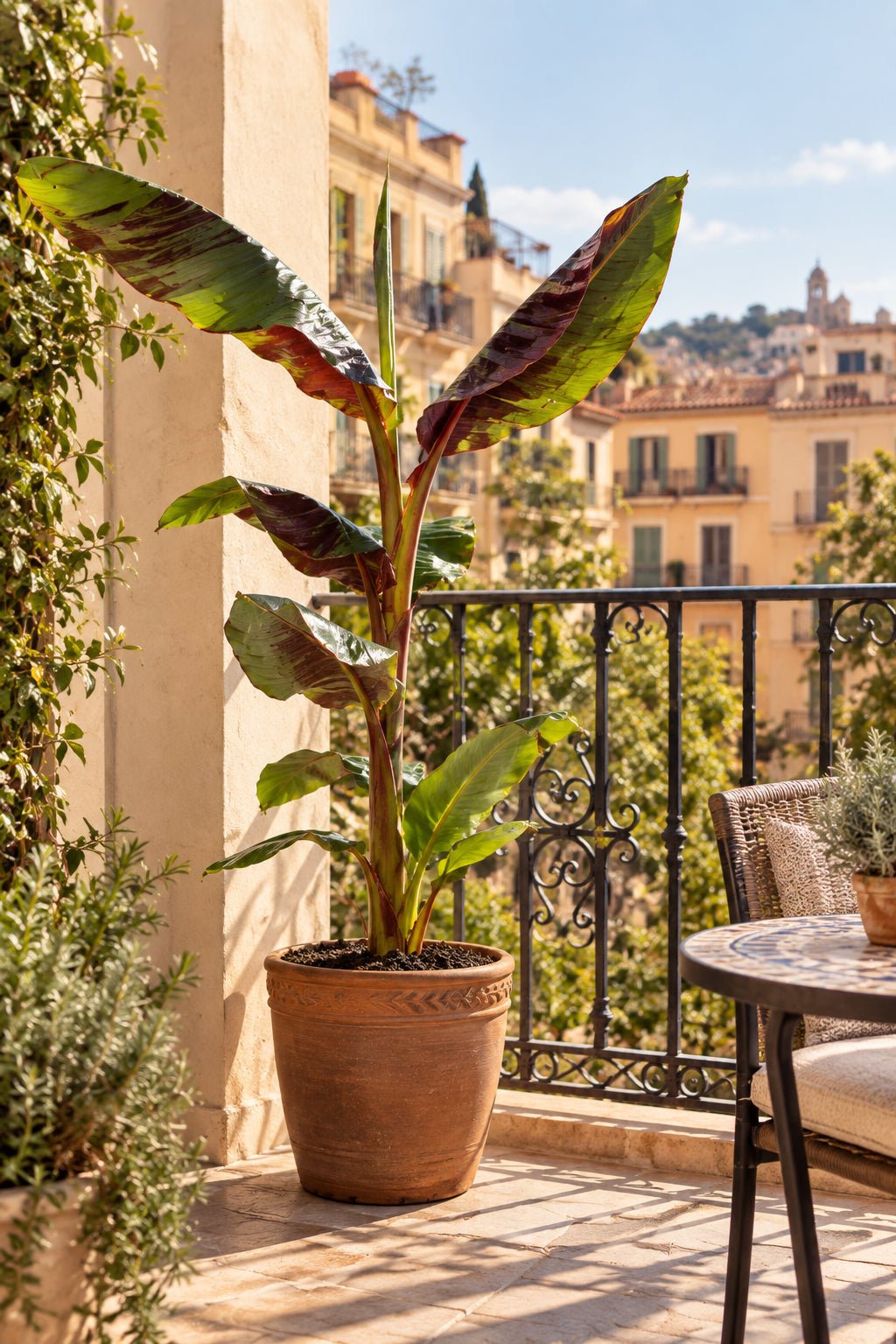

🍂 Deep burgundy-red leaf undersides • 🌿 Glossy dark green foliage • 🌴 Compact habit for a banana plant • ☀️ Sun to partial shade • 🏠 Overwinter frost-free • 🐾 Non-toxic
The Musa 'Ever Red' has large dark green leaves with deep burgundy-red undersides, a coloration that is fully revealed when light passes through the leaf blade. This species is native to southeast Asia, and this cultivar joins the catalogue's exotic plants.
Its distinctive feature is its size: where most banana plants quickly exceed 3 metres, 'Ever Red' stays around 1.50 to 2 metres. It is the only larger size in the catalogue that can be grown indoors long-term, in a bright room.
Which banana plant should you choose?
Six banana plants in the catalogue, from desk-sized plants to terrace trees:
- Musa 'Ever Red' (this plant) - deep burgundy-red undersides, compact habit (H70-90 cm | Pot Ø21 cm). The larger size best suited to indoor growing.
- Musa ensete 'Maurelli' - blood-red pseudostem and veins, massive habit (H70-90 cm | Pot Ø21 cm). The most spectacular.
- Musa basjoo - soft green foliage, hardy clump to -12 °C (H70-90 cm | Pot Ø21 cm). The only one that can spend the winter outdoors.
- Musa acuminata 'Dwarf Cavendish' - dwarf banana plant with young leaves marbled brown-purple, reaching a maximum of 1.50 m (H75 cm | Pot Ø21 cm). The most compact of the larger sizes.
- Musa 'Oriental Dwarf' - dwarf indoor banana plant (H25 cm | Pot Ø12 cm). The smallest size.
- Musa tropicana - arched leaves on a small plant (H27 cm | Pot Ø12 cm). The most affordable.
Light exposure & location
The red coloration on the undersides depends directly on the amount of light received. In a dark room, new leaves emerge almost entirely green and the plant loses all its appeal.
- Light exposure: bright light to filtered sun - in front of an east- or west-facing window indoors, bright partial shade outdoors.
- Location: conservatory, bright living room, sheltered terrace in the warmer months - must be protected from the wind.
- Temperature: minimum 5 °C — bring it indoors as soon as autumn arrives, as it cannot tolerate frost.
- Soil type: rich, deep, and moist — potting soil enriched with compost, as banana plants are very hungry feeders.
The red is most visible when backlit: placed between the light and the viewer, the leaf blade becomes translucent and the color appears in full.
Watering & care
A banana plant uses a huge amount of water during the season: its leaf surface evaporates far more than that of any other plant. A rich, water-retentive substrate is essential, and browning leaf edges almost always indicate a lack of water or air that is too dry.
- Watering: water generously from April to September; the substrate must never dry out — water less frequently in winter, without ever letting it dry out completely.
- Humidity: mist the foliage in winter — heating dries out the air and browns the leaf edges.
- Drainage: still necessary — plenty of water, but no standing water.
- Fertilizer: every two weeks from April to August, none in winter.
- Cleaning: wipe the large leaves with a damp cloth, as dust quickly settles on them.
The lowest leaves turn yellow and then dry out as the plant produces new ones: this is normal renewal, so cut them off at the base.
Decor ideas & plant combinations
Its compact size makes this banana plant suitable for a living room: the jungle effect without the 3-meter height that makes other species unmanageable indoors.
- For a banana plant contrast, pair it with Musa basjoo — soft green against dark green with a red underside, outdoors during the warmer months.
- For a jungle arrangement, place a Strelitzia nicolai next to it — two large paddle leaves, one red on the underside and the other gray-green.
- To dress the base, add a Calathea orbifolia — its silver-striped foliage fills the lower area that the banana plant leaves open.
- To enhance the pot, a dark matte ceramic decorative pot makes the burgundy undersides stand out better than a light-colored container.
Placed in front of a window rather than with its back to it, it displays the colored side of its leaves instead of hiding it.
Verdeia tips
- Bring it indoors before the first frosts: unlike Musa basjoo, 'Ever Red' does not tolerate frost and dies as soon as temperatures reach 0 °C. As soon as nighttime temperatures fall below 5 °C, move it indoors or into a conservatory.
- Give it as much light as possible: the red color of the undersides is directly proportional to the amount of light. In a dark corner, new leaves emerge green and the plant loses the feature that makes it so desirable.
- Mist it during the heating season: dry air causes the edges of these large, delicate leaves to turn brown. Regularly wiping them with a damp cloth maintains humidity and removes dust that blocks the light.
Technical specifications
- Botanical name: Musa 'Ever Red'
- Common name: Red-leaved banana plant
- Family: Musaceae
- Origin: Southeast Asia
- Delivery dimensions: H70-90 cm | Pot Ø21 cm
- Habit: upright, compact pseudostem for a banana plant
- Mature height: 1.50 to 2 meters
- Exposure: bright light to filtered sun
- Watering: abundant during the growing season, reduced in winter
- Humidity: high, misting recommended in winter
- Soil type: rich, deep, and moist
- Temperature: minimum 5 °C, does not tolerate frost
- Growth: fast during the growing season
- Foliage: evergreen indoors, dark green with burgundy-red undersides
- Fruiting: ornamental only, fruit not edible
- Care: regular watering and fertilization, overwintering frost-free
- Toxicity: 🐾 non-toxic to animals and children
- Decorative style: Tropical / Jungle / Colorful
Each plant is unique: the height of the pseudostem, the number of leaves, and the intensity of the red naturally vary according to the light it receives.

Your plant, delivered with care
Every plant is hand-packed in a box specially designed for plants — secured, protected, ready to travel. It arrives in perfect condition, roots intact and foliage preserved, ready to take its place in your home.
Our Verdeia commitments
FAQ – Everything to know before adopting your Verdeia plant
How are my plants prepared before shipping?
All our plants are selected from our European partner nurseries. Before shipping, they are watered, cleaned, and protected with breathable, secure packaging. Each package is designed to ensure your plant arrives in perfect health, without any transport-related stress.
Will the plant look exactly like the photo?
The photos accurately represent the variety and the stated size. Since each plant is unique, slight differences in shape, foliage, or color may occur — and that’s part of their charm.
What are the delivery times and conditions?
Shipping is done within 48 business hours, with tracked delivery within 2 to 5 business days. Delivery costs €5.60 — free for orders over €50. You will receive a tracking link as soon as the package is shipped.
What to do upon receiving my plant?
Open your package as soon as you receive it and carefully remove the plant from its packaging. Let it acclimate for 24 hours in its new environment before watering. If it has been slightly stressed during transport, it will recover its shape after one or two days in the light.
What to do if my plant arrives damaged?
Contact us within 48 hours with a photo of the issue. Our team will assess the situation and offer you the best solution: replacement, partial refund, or recovery advice.
Can I return a plant?
Since plants are living beings, standard returns are not possible. However, we guarantee good health upon delivery: if the plant arrives damaged, it will be replaced free of charge. For any other cases (order error, decorative pot, accessory), returns are possible within 14 days.