



Philodendron White Princess — H16 cm | Pot Ø6 cm
- Regular price
-
€23,95 - Regular price
-
- Sale price
-
€23,95
Couldn't load pickup availability
Frequently asked questions
What is the difference between the Philodendron White Princess and the White Knight or White Wizard? All three are green and white variegated Philodendrons, but they differ in their petioles and leaf shape. The White Princess has green petioles, the White Knight has burgundy red petioles, and the White Wizard has completely white petioles. The White Princess is generally the easiest of the three in terms of care and price.
Is a completely white leaf on my Philodendron normal? Yes — a completely white leaf is striking but temporary. Without chlorophyll, it cannot photosynthesize and will gradually turn brown. This is a natural feature of the unstable variegation of this variety. Cut the leaf once it has fully browned to encourage the plant to produce new leaves.
Shipping & packaging
Shipped within 24/48 hours via DPD
- Delivery in 2 to 5 working days
- Eco-friendly packaging: recyclable boxes and biodegradable materials
- Special protection so your plant arrives in perfect condition
- Tracking link sent by email as soon as your parcel ships
- Shipping costs and the free-shipping threshold depend on your country — see our delivery page
ZEN ARRIVAL GUARANTEE
We guarantee that your plants will arrive in perfect condition. If your plant arrives damaged or in poor condition:
- Contact us promptly at hello@verdeia.eu with photos
- We will find the right solution for your situation
- No return needed — we trust you
The guarantee covers: damage in transit, plants severely weakened on arrival, and order preparation errors.
CARE TIPS ON ARRIVAL
To help your plant settle in for the long term:
- Unpack your plant immediately and inspect it
- Let it acclimatize for 24-48h in a bright spot out of direct sunlight
- Check the soil moisture before watering (dry surface = light watering)
- Wait 2-3 weeks before repotting, if needed
- Keep it away from heat sources and drafts
- Gently wipe the leaves to remove dust
Need help? Contact our team at hello@verdeia.eu or via chat.
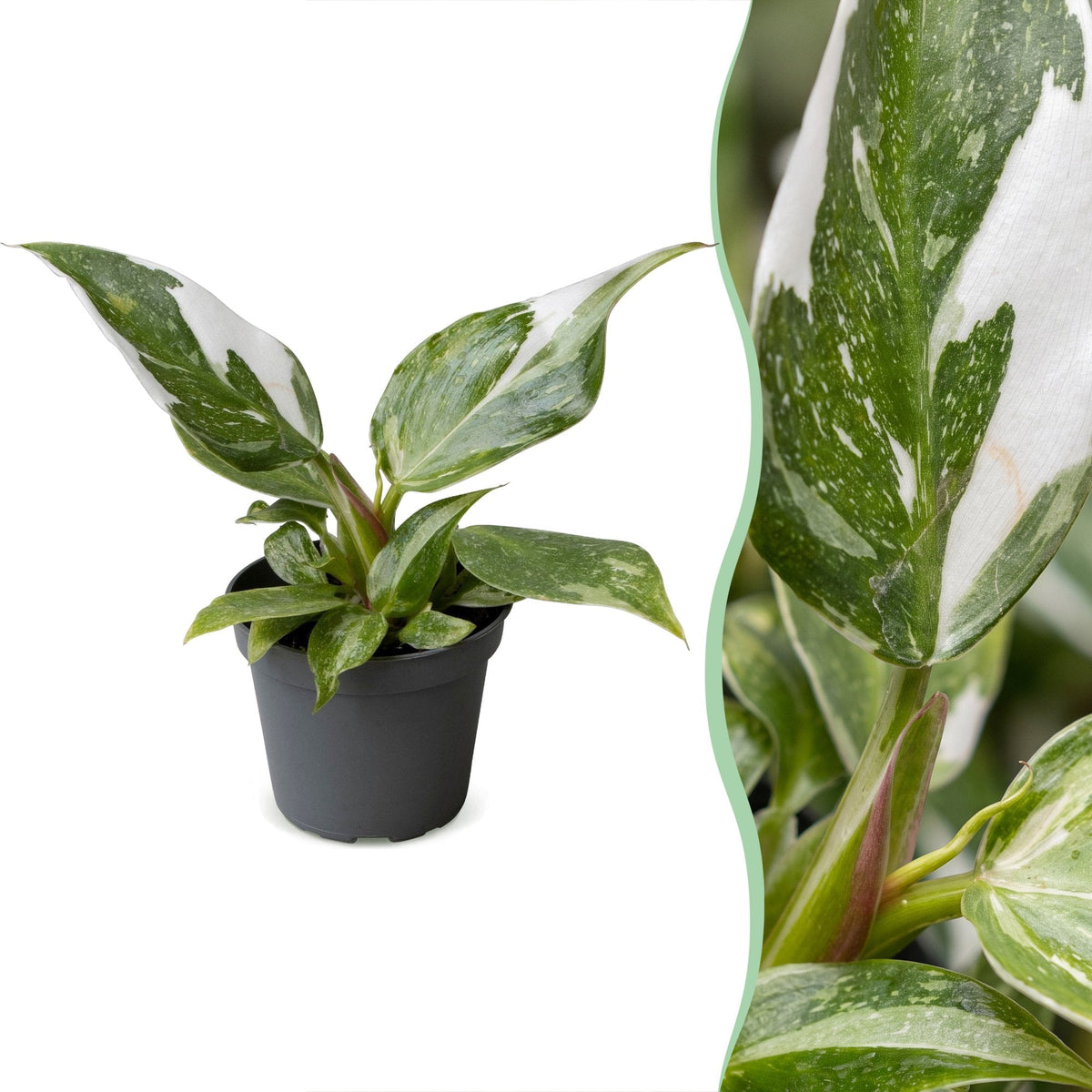
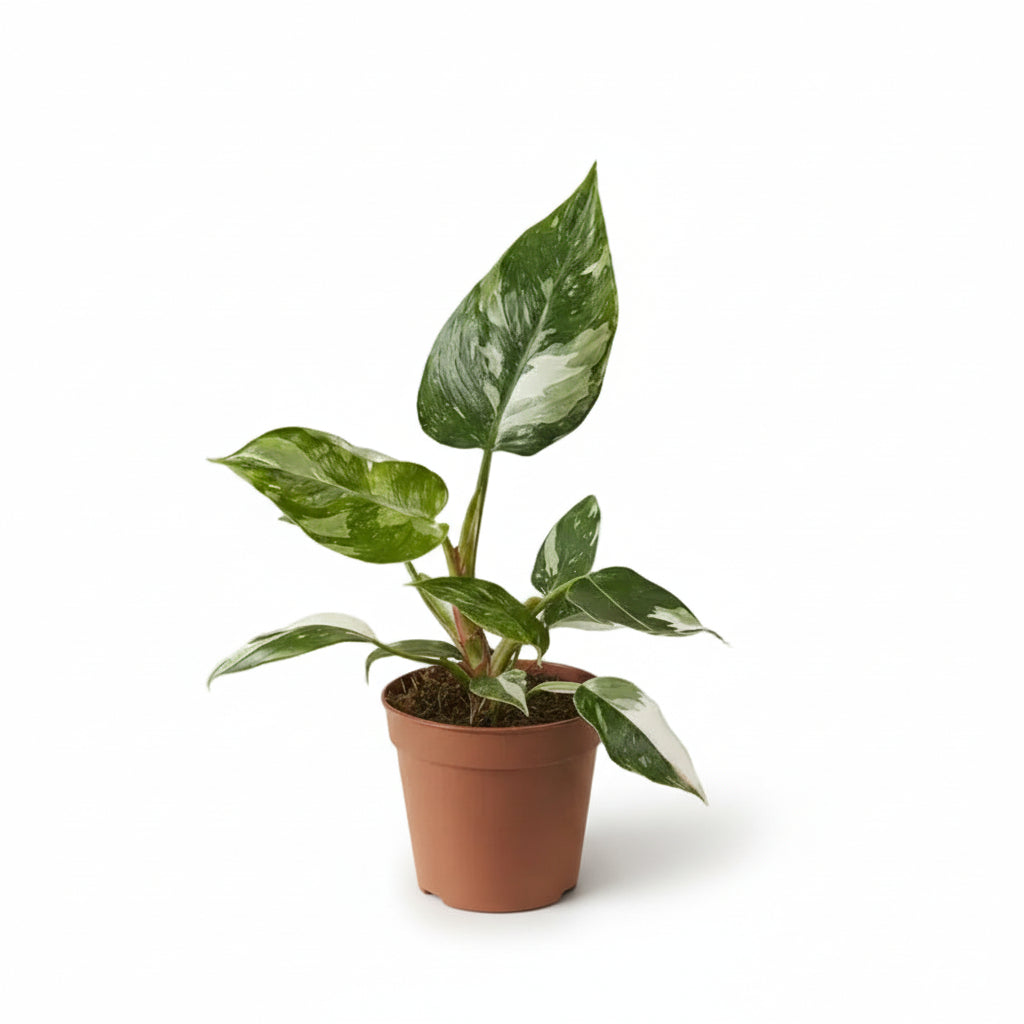

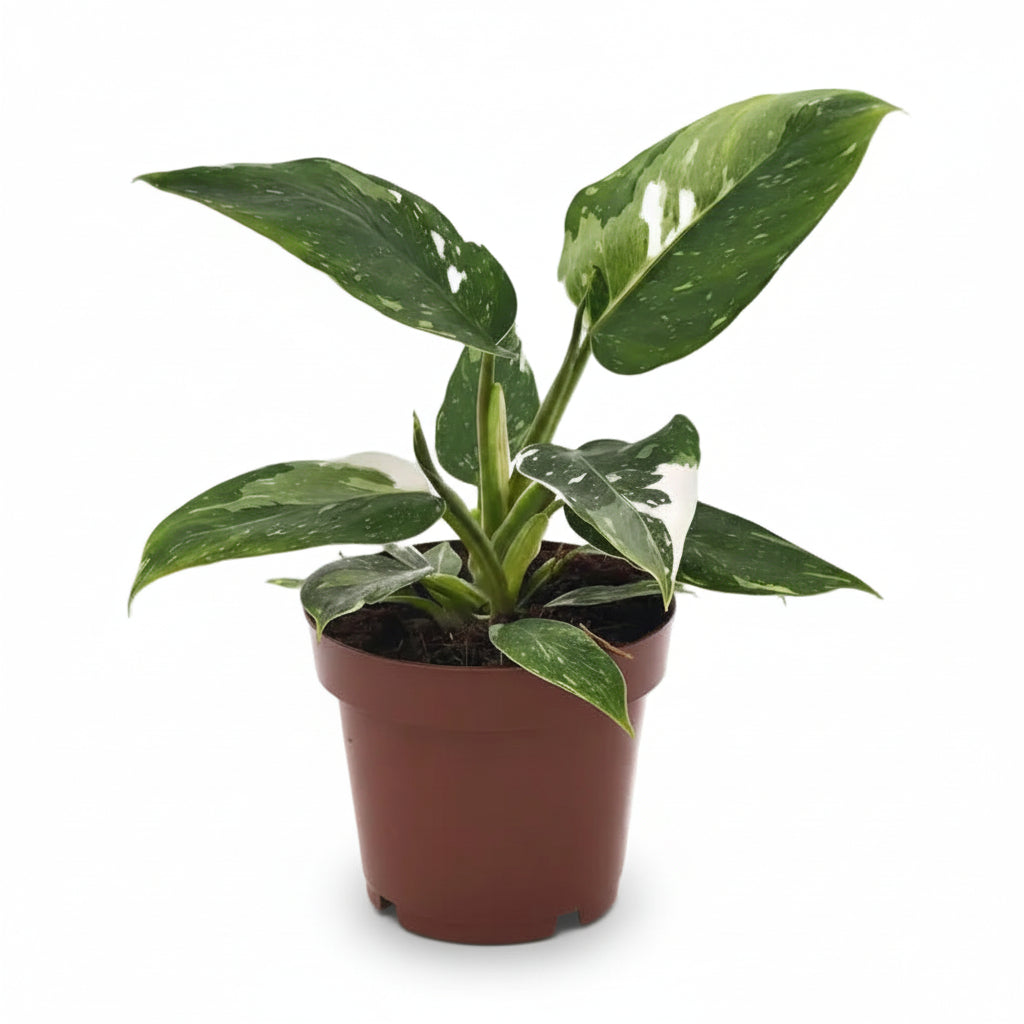
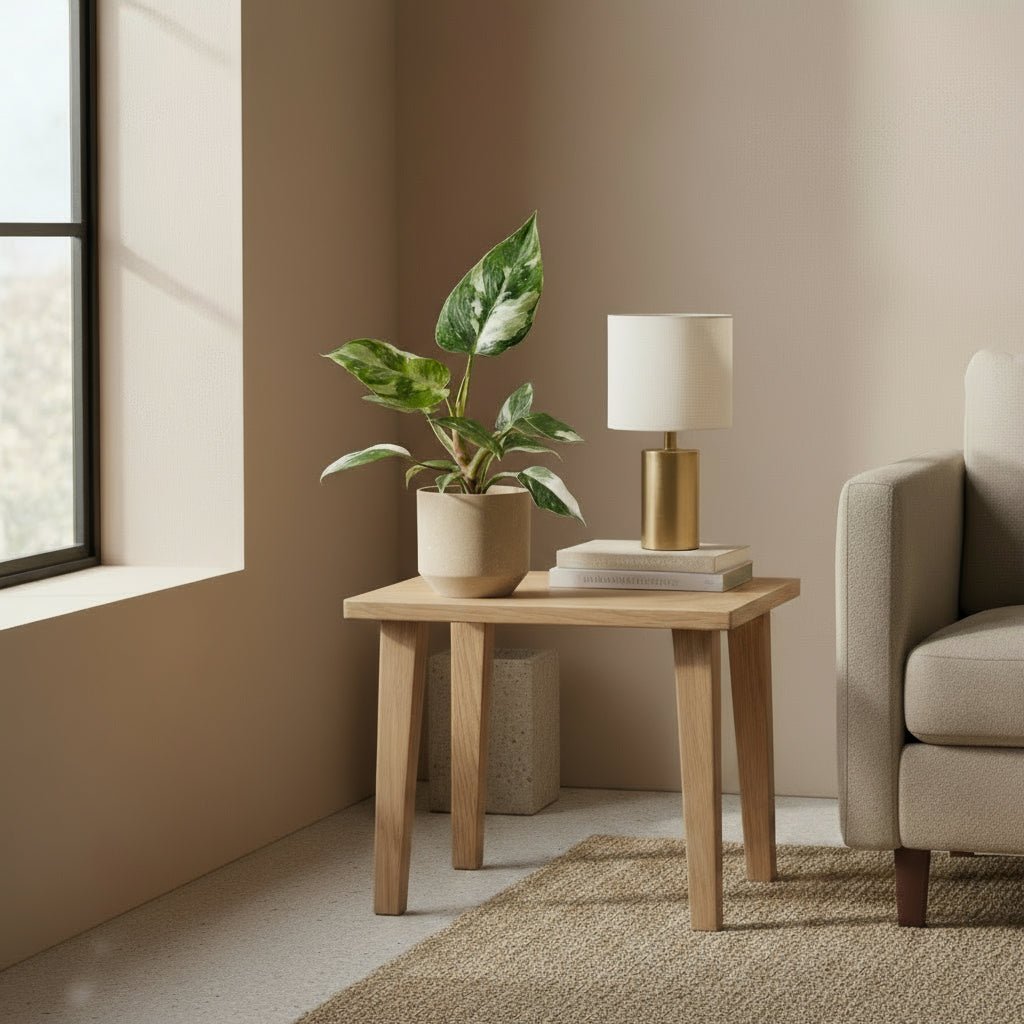
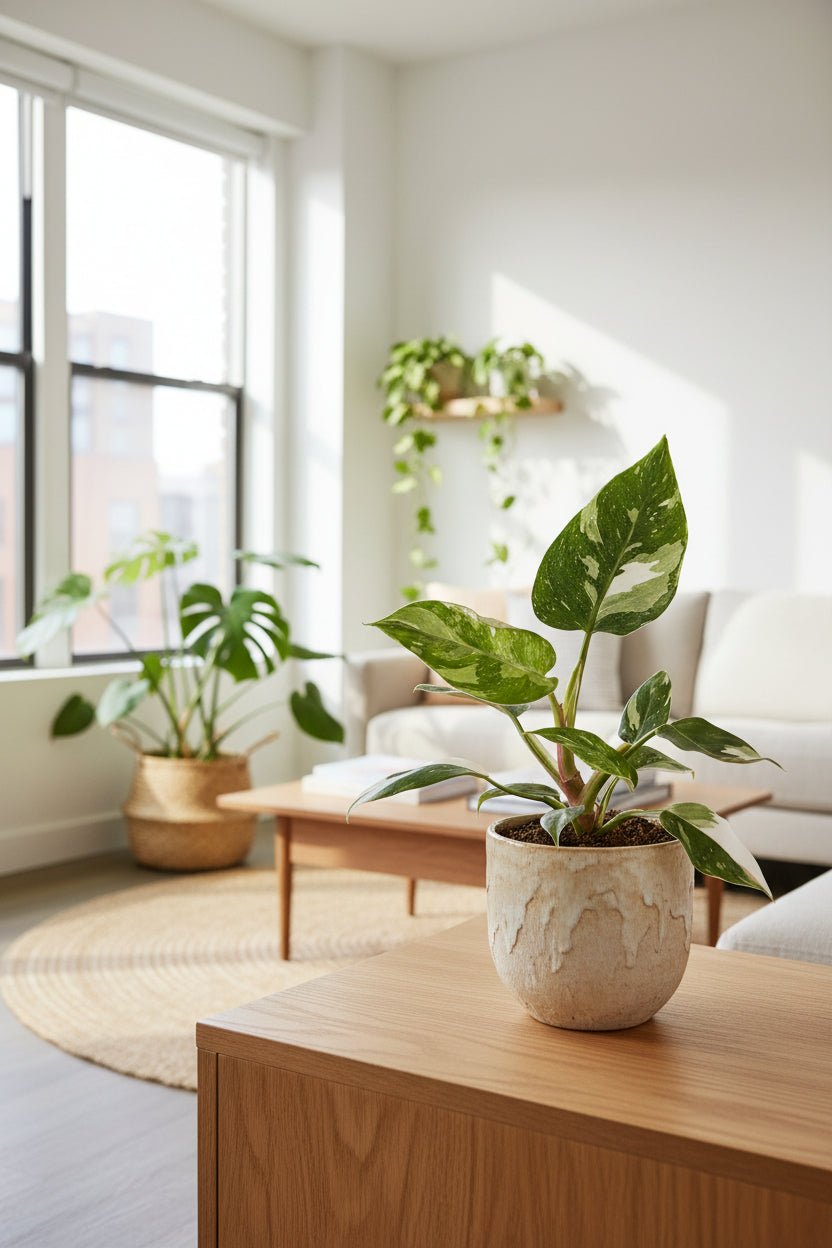
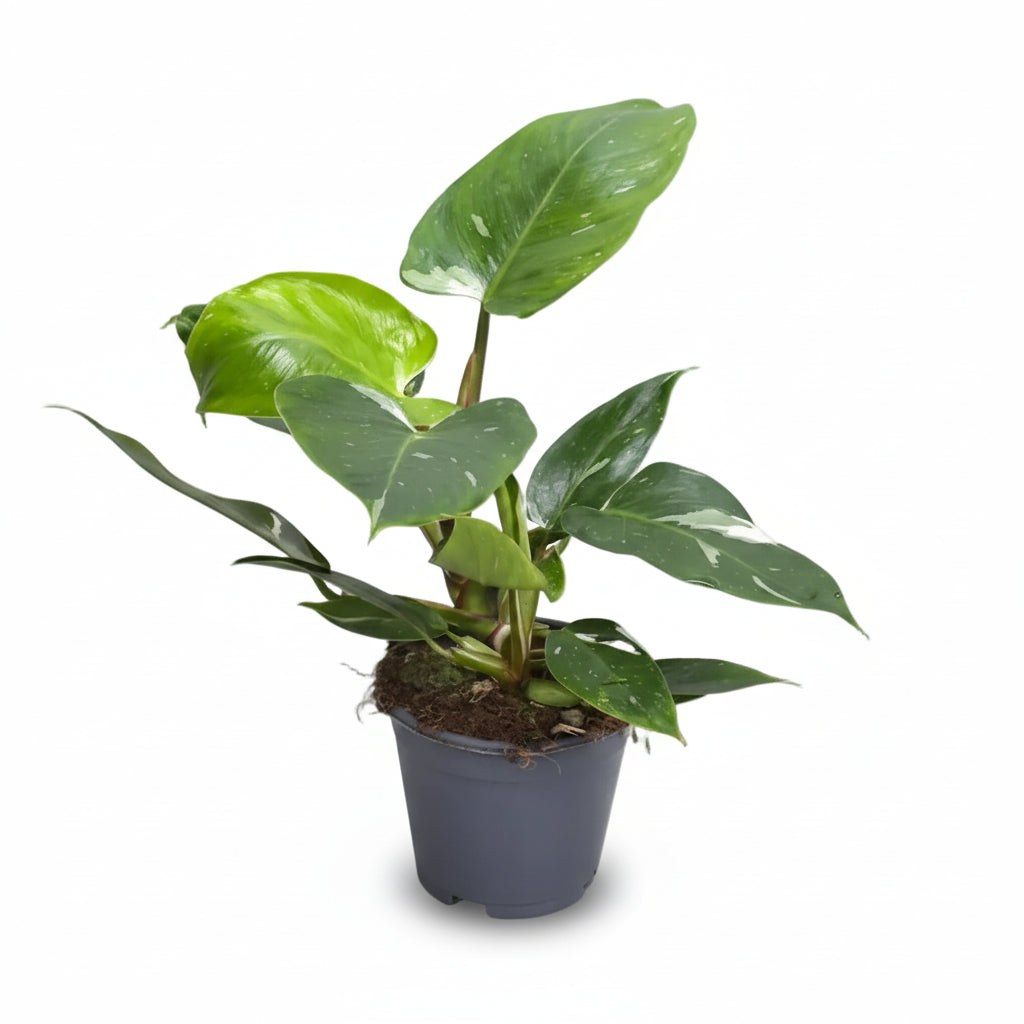
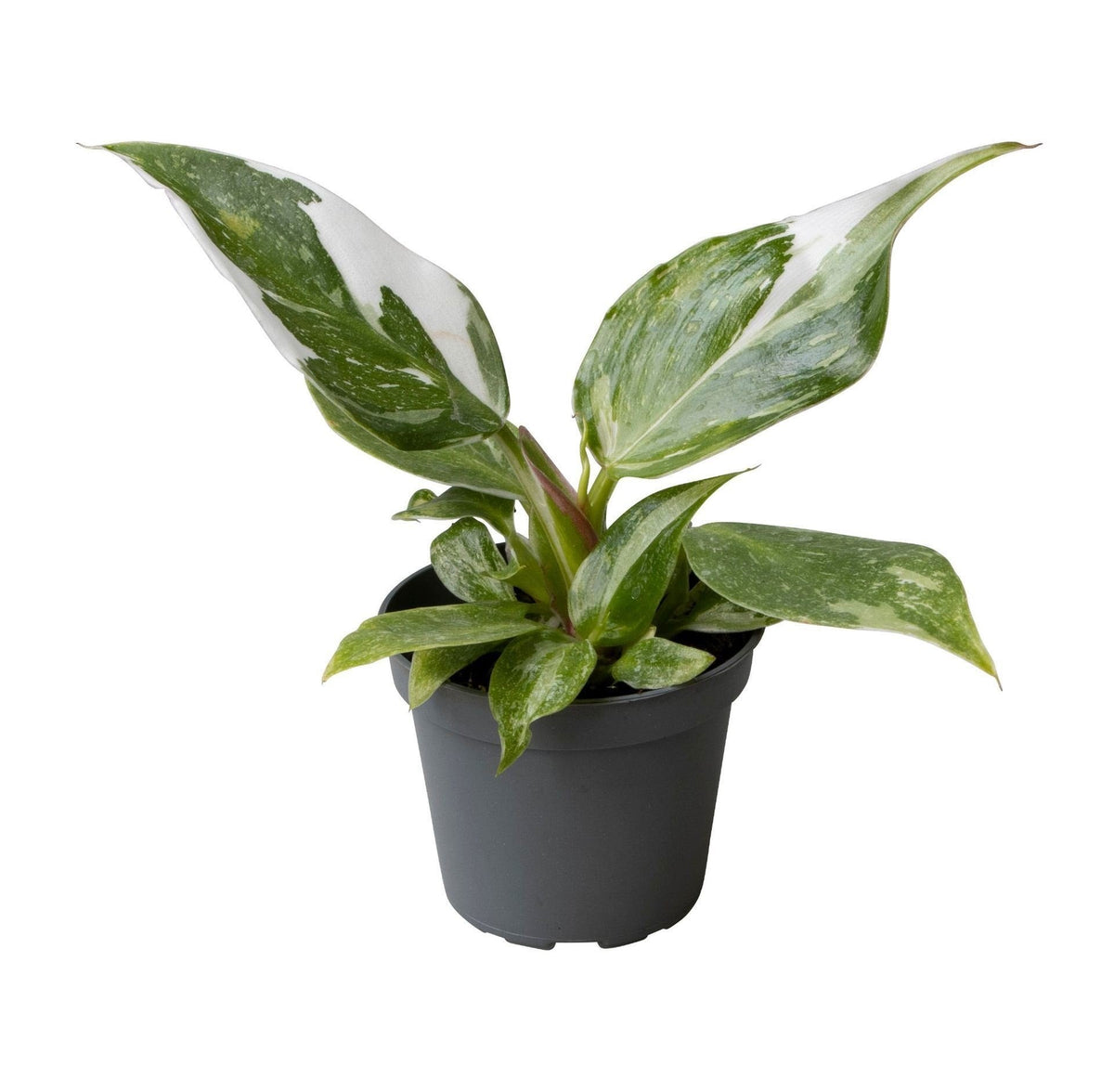

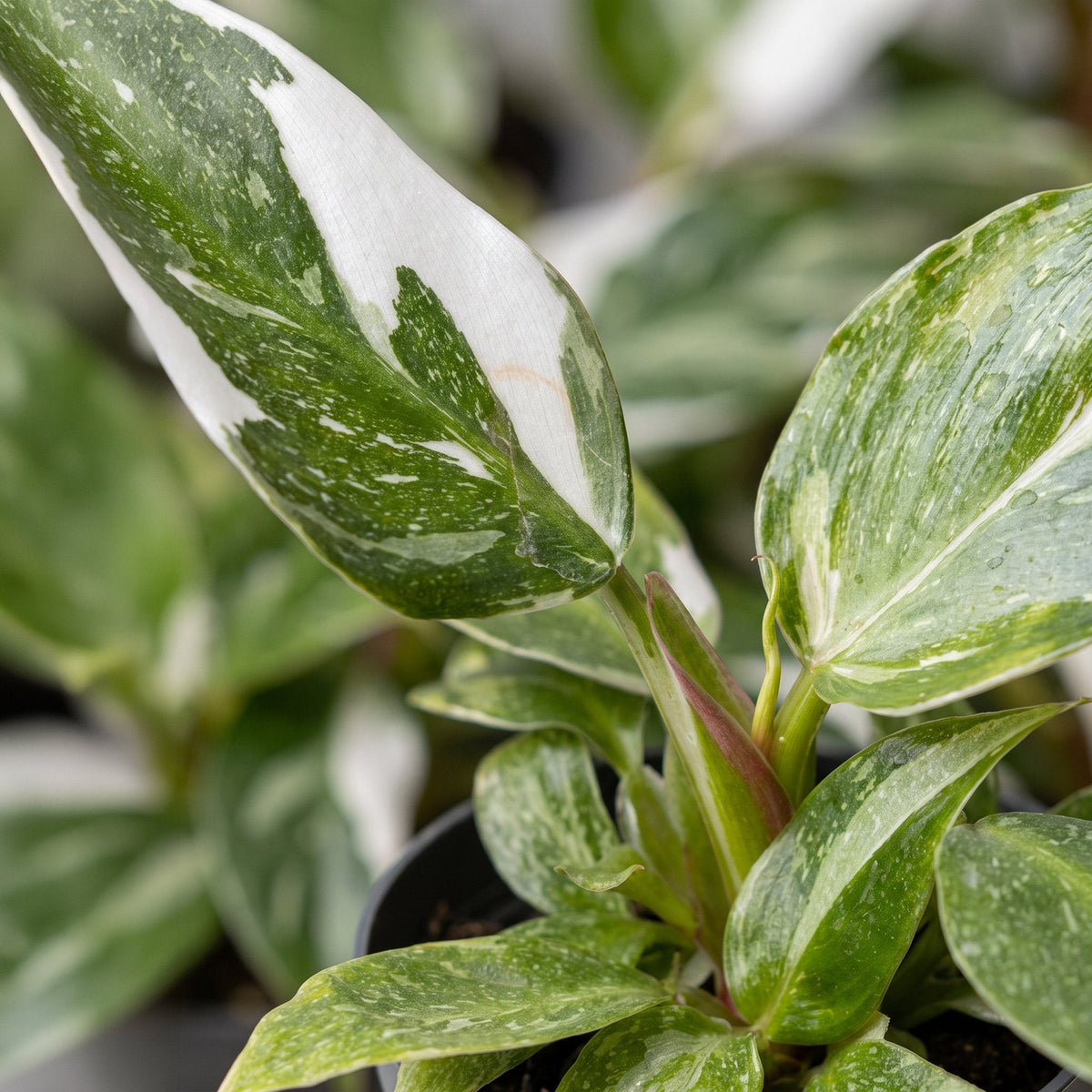
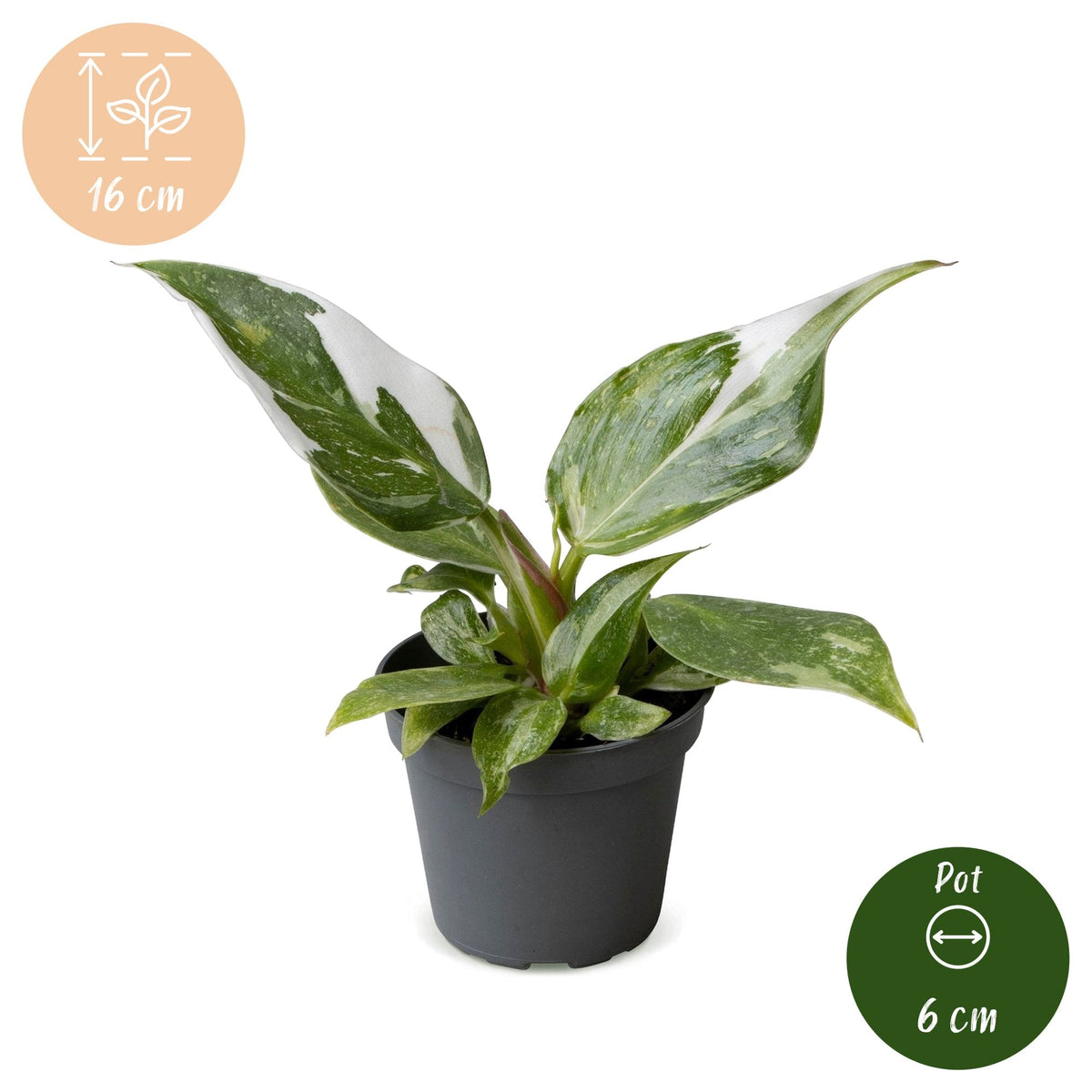

🌿 Unique green-and-white variegation on every leaf • ☀️ Bright indirect light • 💧 Moderate watering • 🌱 Rare collectible plant • 📏 H16 cm | Pot Ø6 cm
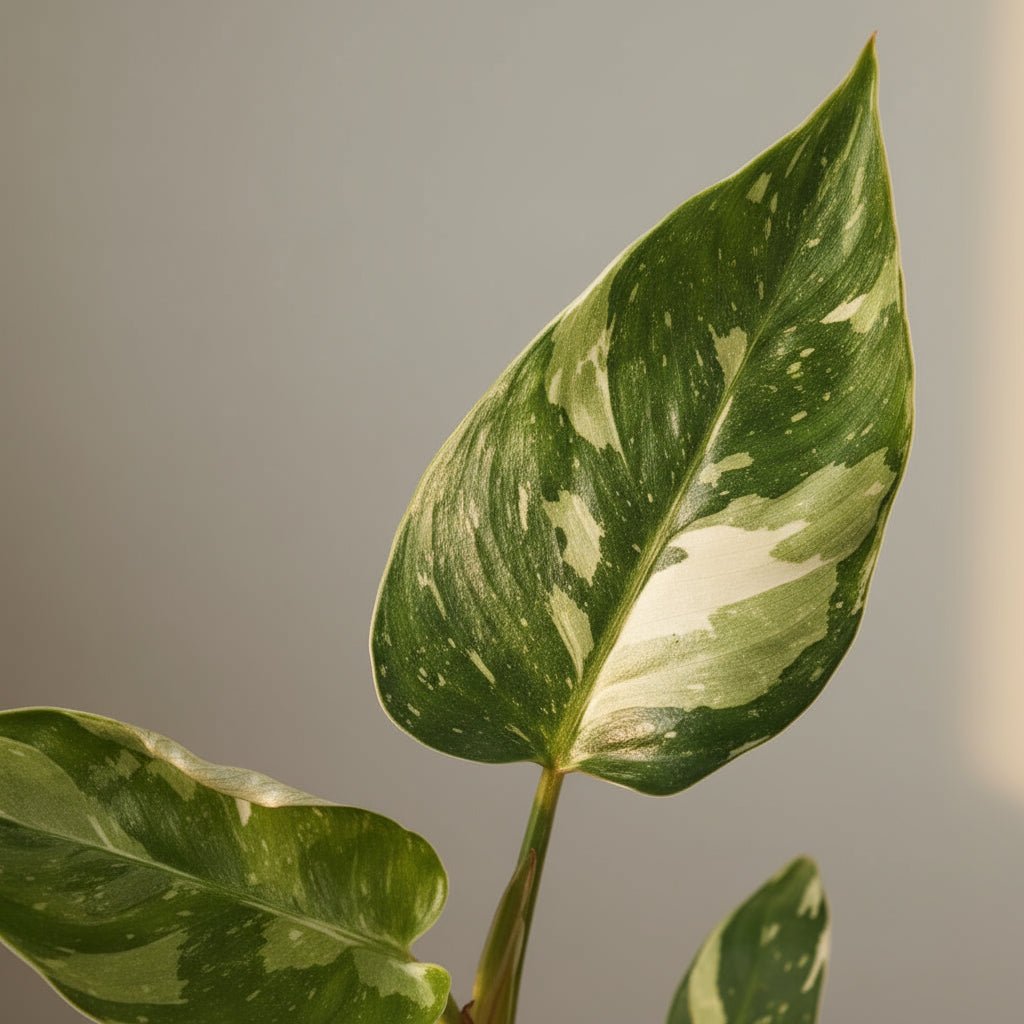
The Philodendron White Princess is a collectible tropical plant with heart-shaped leaves adorned with creamy white variegation contrasting with deep green. Each leaf differs from the previous one — the distribution of white and green is unpredictable with each new growth, making every plant truly unique and watching it develop over time particularly fascinating.
Native to the tropical forests of Central and South America, it is one of the most sought-after hybrid varieties in the Philodendron genus — combining the family's characteristic resilience with spectacular variegated foliage rarely available at this price. A safe choice among unusual and rare plants.
Which Philodendron variety should you choose?
The Philodendron genus offers very different types of foliage — here is where the White Princess fits in:
- Philodendron White Princess (this plant) — variable green-and-white variegation, each leaf unique, with compact climbing growth. The collectible variegated version.
- Philodendron Birkin — dark green foliage with fine, structured, regular white stripes. The geometric-variegation version.
- Philodendron Green Princess — glossy solid-green foliage, compact growth, very easy to care for. The classic non-variegated version.
- Philodendron Prince of Orange — bright orange new leaves that gradually turn green. The warm-colored version.
- Philodendron Imperial Red — spectacular red-bronze foliage with large, smooth leaves. The colorful XXL version.
- Philodendron Billietiae — elongated leaves with orange petioles and a rare climbing habit. The elongated collector's version.
If you can't decide between White Princess and Pink Princess — they have the same variegation instability, but Pink Princess produces pink areas instead of white, making it much rarer and more demanding to grow.
Exposure & placement
The White Princess needs bright indirect light to maintain its white variegation — this is its main requirement. In insufficient light, new leaves gradually tend to turn green again to compensate for the lack of chlorophyll, and the plant progressively loses its decorative appeal. The white parts of the leaves are also much more sensitive to direct sun than the green areas — exposure to scorching sun quickly causes them to become necrotic.
- Ideal exposure: bright indirect light — an east- or west-facing window, a bright shelf, or a well-lit desk.
- To avoid: direct sun, which burns the delicate white parts, and partial shade, which causes the foliage to turn green again.
- Temperature: 18–27 °C, without sudden fluctuations or drafts.
- Substrate: light, airy, and very well-draining — potting mix for tropical plants with perlite and bark.
If the new leaves emerge mostly green without white variegation, it is almost always due to a lack of light — move the plant to a brighter spot and the following leaves will regain their white areas.
Watering & care
White Princess tolerates a slight lack of water better than excess — its roots are prone to rot in constantly waterlogged potting mix. Yellowing leaves are almost always a sign of overwatering; the finger test remains the best way to find the right watering schedule.
- Watering: moderate — let the top 2 to 3 cm of substrate dry out between waterings.
- Frequency: approximately once a week in spring and summer; reduce in winter.
- Humidity: 60 to 70% — mist occasionally or place near a humidifier.
- Drainage: essential — a pot with drainage holes is mandatory; empty the saucer after watering.
- Fertilizer: diluted liquid fertilizer for green plants, once a month in spring and summer.
A completely white leaf without chlorophyll will eventually turn brown — this is inevitable and normal. Remove it only when it is completely dry to avoid unnecessarily stressing the plant.
Decor ideas & plant pairings
The white variegation of the White Princess naturally makes it the star plant of any arrangement — it immediately draws the eye and adds rare sophistication. Alongside other graphic plants, it fits perfectly into a tropical setting.
- As a variegated duo: pair it with a Scindapsus pictus 'Argyraeus' — the Scindapsus's shimmering silver spots complement the White Princess's creamy white areas for a composition entirely in pale, luminous tones.
- In a Philodendron collection: group it with a Birkin and a Prince of Orange on the same shelf — three very different variegation patterns (free-form areas, regular stripes, color gradient) within the same family.
- On a bright shelf: the H16 cm | Pot Ø6 cm format is ideal for a shelf.
- Decorative pot and color scheme: at the first repotting, in a Ø10 cm nursery pot, it will find its place in the natural seagrass basket in Ø12 cm.
Verdeia tips
- Watch each new leaf emerge as a surprise: the distribution of white and green varies with every new shoot — some will be mostly white, while others will be mostly green. It is the natural instability of the variegation that makes this plant fascinating to observe over time.
- Install a moss pole at the first repotting: White Princess is naturally climbing — a moist moss pole encourages vertical growth, stimulates the development of aerial roots and promotes the emergence of progressively larger leaves.
- Provide bright, consistent light: do not move the plant frequently — stable, bright exposure produces the most generous and contrasting variegation, while repeated changes of location disrupt growth.
White Princess is one of the few accessible variegated plants that offers genuine visual evolution over time — each new leaf is a discovery, making it especially appealing to beginner collectors.
Technical characteristics
- Botanical name: Philodendron 'White Princess'
- Common name: Philodendron White Princess
- Family: Araceae
- Origin: Central and South America (hybrid variety)
- Dimensions on delivery: H16 cm | Pot Ø6 cm
- Mature size: 60–90 cm indoors (climbing with a support)
- Light: bright indirect light
- Substrate: light, airy and well-draining — tropical potting mix with perlite and bark
- Watering: moderate — let the top 2–3 cm dry out between waterings
- Care: moderate
- Growth: moderate
- Toxicity: toxic if ingested (calcium oxalate crystals)
- Decorative style: Collector / Elegant / Rare
- Special feature: variable green-and-white variegation, each leaf unique, unstable and evolving variegation
Each plant is unique: the photos show a representative example. The distribution and intensity of the variegation naturally vary from one leaf to another — that is what makes each White Princess absolutely unique.

Your plant, delivered with care
Every plant is hand-packed in a box specially designed for plants — secured, protected, ready to travel. It arrives in perfect condition, roots intact and foliage preserved, ready to take its place in your home.
Our Verdeia commitments
FAQ – Everything to know before adopting your Verdeia plant
How are my plants prepared before shipping?
All our plants are selected from our European partner nurseries. Before shipping, they are watered, cleaned, and protected with breathable, secure packaging. Each package is designed to ensure your plant arrives in perfect health, without any transport-related stress.
Will the plant look exactly like the photo?
The photos accurately represent the variety and the stated size. Since each plant is unique, slight differences in shape, foliage, or color may occur — and that’s part of their charm.
What are the delivery times and conditions?
Orders ship within 48 working hours, with tracked delivery in 2 to 5 working days via DPD. Shipping costs and the free-shipping threshold depend on your country — see our delivery page. You receive a tracking link as soon as your parcel leaves.
What should I do when my plant arrives?
Open your package as soon as you receive it and carefully remove the plant from its packaging. Let it acclimate for 24 hours in its new environment before watering. If it has been slightly stressed during transport, it will recover its shape after one or two days in the light.
What should I do if my plant arrives damaged?
Contact us within 48 hours with a photo of the issue. Our team will assess the situation and offer you the best solution: replacement, partial refund, or recovery advice.
Can I return a plant?
Since plants are living beings, standard returns are not possible. However, we guarantee good health upon delivery: if the plant arrives damaged, it will be replaced free of charge. For any other cases (order error, decorative pot, accessory), returns are possible within 14 days.