



Philodendron 'Pink Princess' (Pink variegated philodendron) — H12 cm | Pot Ø6 cm
- Regular price
-
€21,95 - Regular price
-
- Sale price
-
€21,95
Couldn't load pickup availability
Frequently asked questions
What is the difference between the Philodendron Pink Princess and the White Princess? Both have variegation that varies from one leaf to the next. The Pink Princess carries touches of pink on very dark green to burgundy foliage, with red stems; the White Princess pairs white with dark green. Here, the Pink Princess comes as a young plant, H12 cm | Pot Ø6 cm, and the White Princess as H30 cm | Pot Ø12 cm.
When should you repot a Philodendron Pink Princess? In spring, when the roots fill the pot, into a pot only a few centimeters larger, with a light, free-draining potting mix. It is also the right time to add a moss pole if the plant starts to climb.
Shipping & packaging
Shipped within 24/48 hours via DPD
- Delivery in 2 to 5 working days
- Eco-friendly packaging: recyclable boxes and biodegradable materials
- Special protection so your plant arrives in perfect condition
- Tracking link sent by email as soon as your parcel ships
- Shipping costs and the free-shipping threshold depend on your country — see our delivery page
ZEN ARRIVAL GUARANTEE
We guarantee that your plants will arrive in perfect condition. If your plant arrives damaged or in poor condition:
- Contact us promptly at hello@verdeia.eu with photos
- We will find the right solution for your situation
- No return needed — we trust you
The guarantee covers: damage in transit, plants severely weakened on arrival, and order preparation errors.
CARE TIPS ON ARRIVAL
To help your plant settle in for the long term:
- Unpack your plant immediately and inspect it
- Let it acclimatize for 24-48h in a bright spot out of direct sunlight
- Check the soil moisture before watering (dry surface = light watering)
- Wait 2-3 weeks before repotting, if needed
- Keep it away from heat sources and drafts
- Gently wipe the leaves to remove dust
Need help? Contact our team at hello@verdeia.eu or via chat.
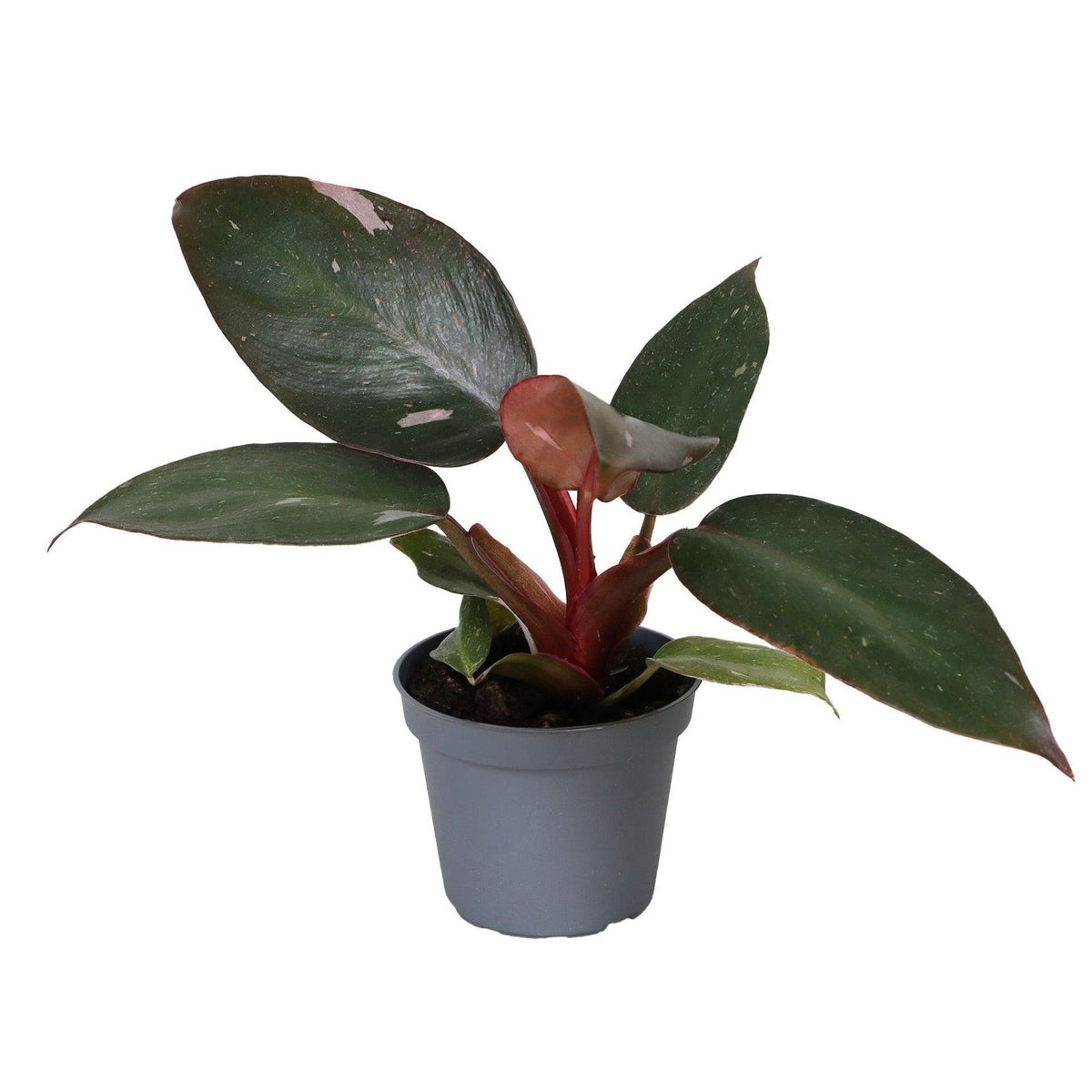
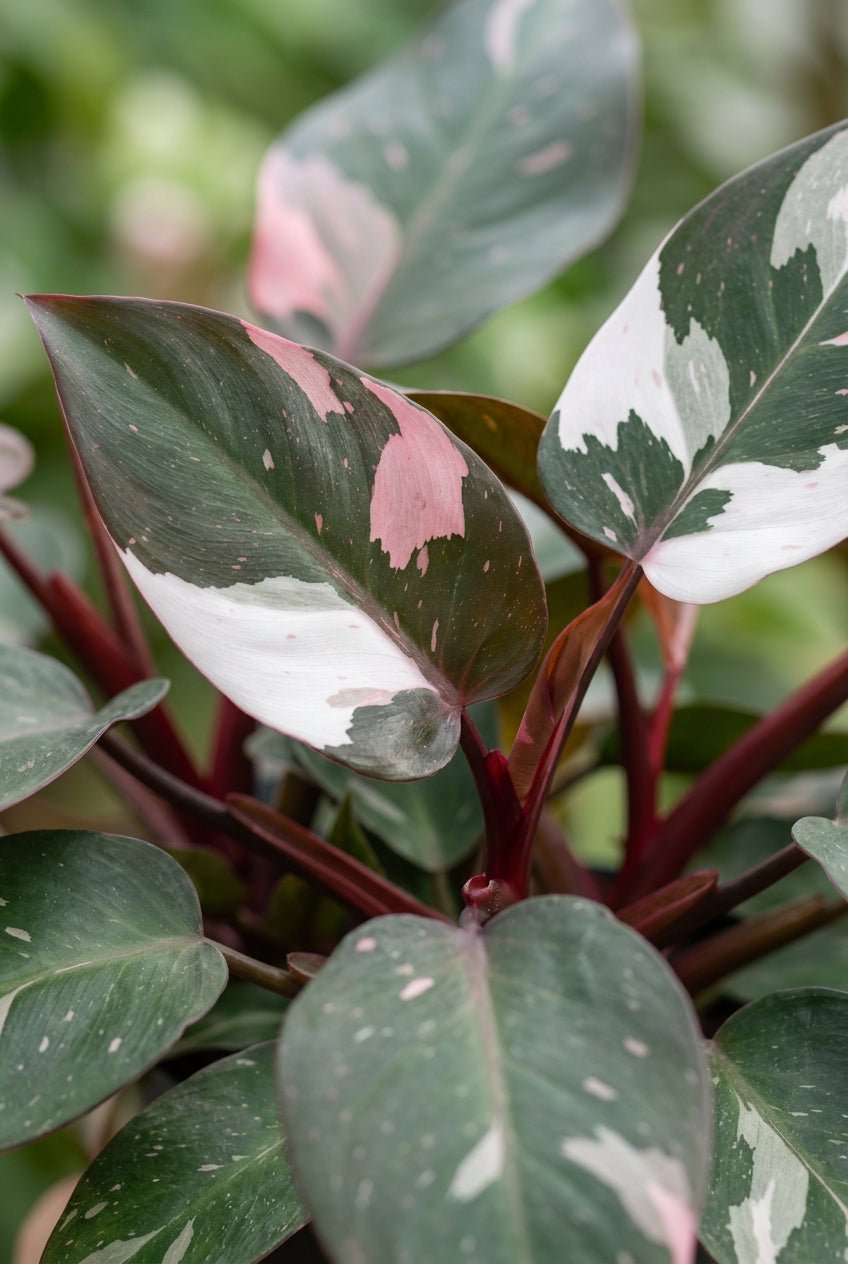
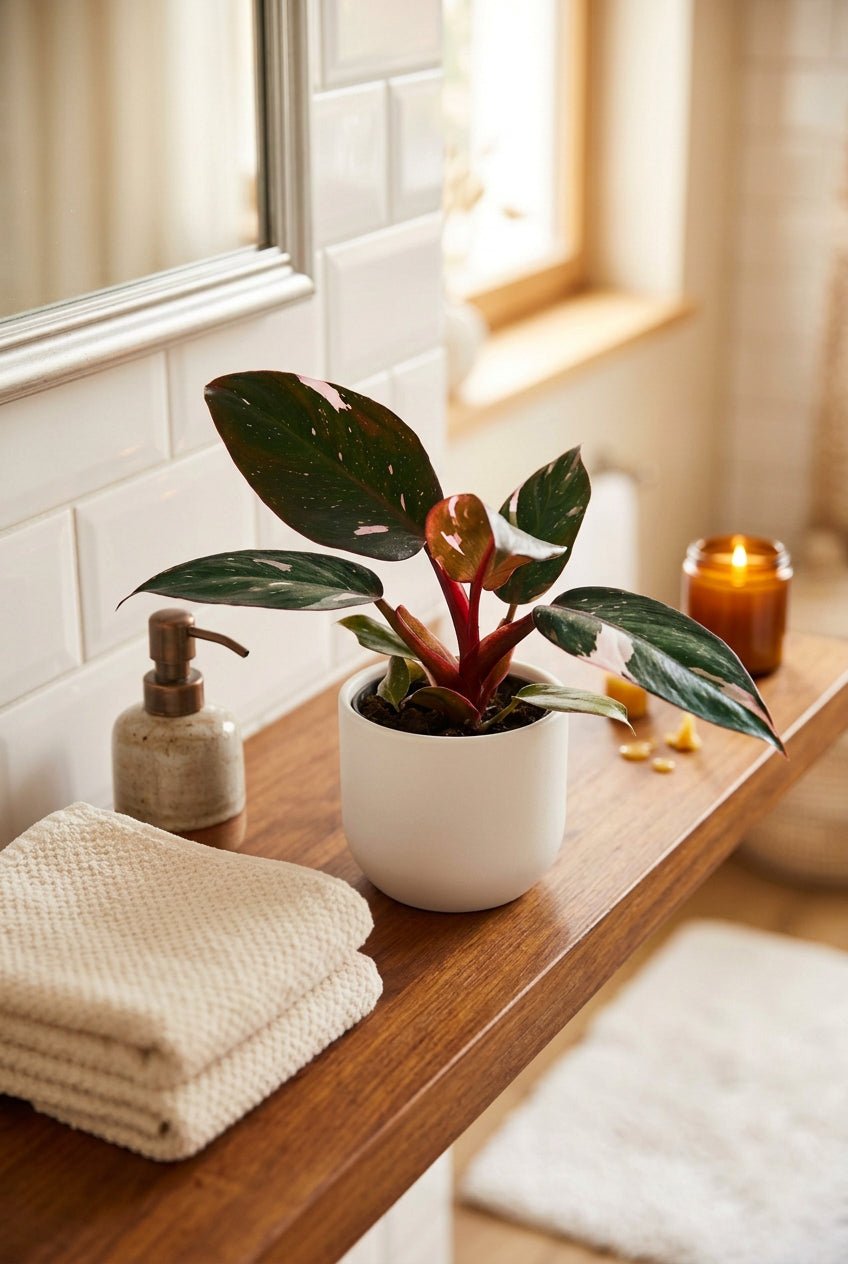
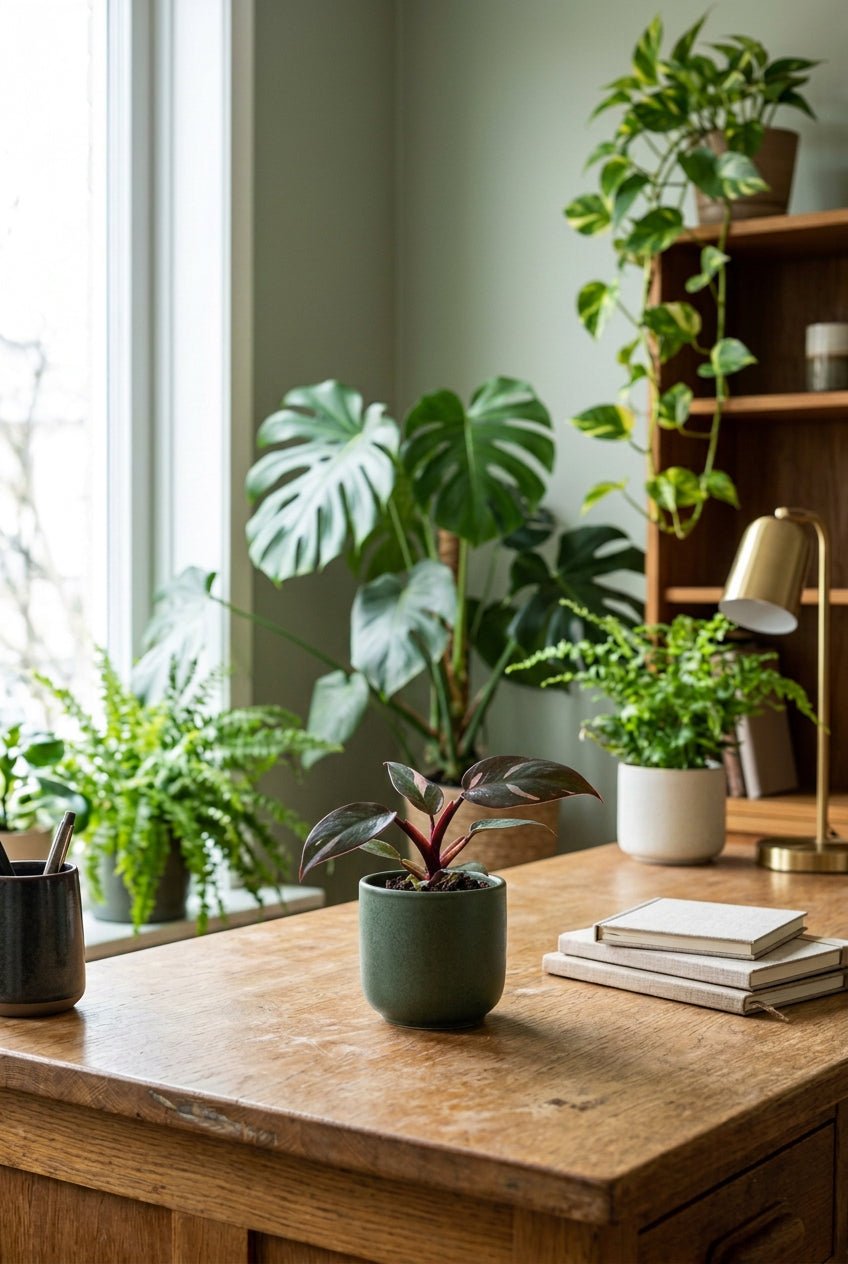

🌸 Pink spots and splashes • 🖤 Very dark green to burgundy foliage • ❤️ Red stems • 🌤️ Bright indirect light • 🌱 Young plant to grow on • 📏 H12 cm | Pot Ø6 cm
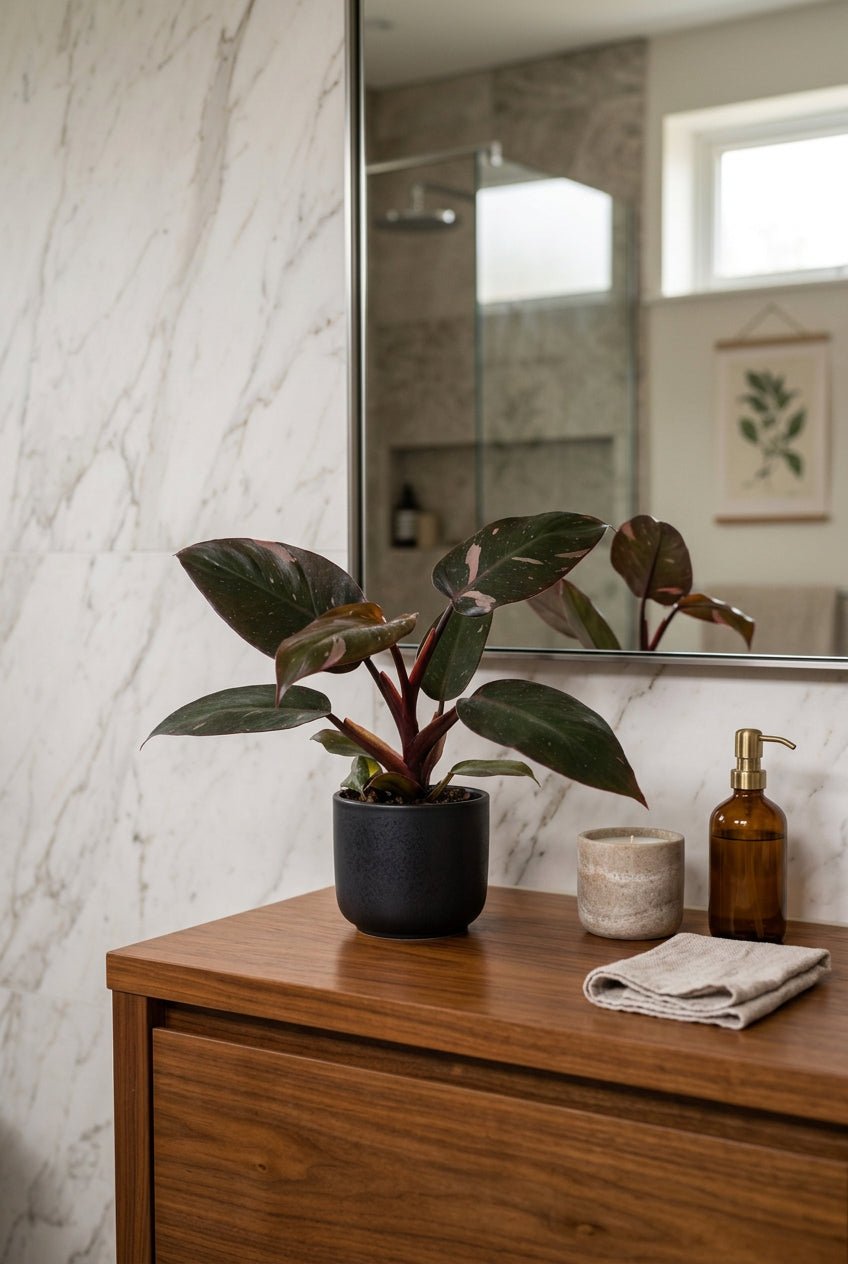
The Philodendron 'Pink Princess' has oval leaves with tapering tips, a very dark green that leans toward burgundy, sprinkled with small pink spots and splashes. Its stems are red, and each young leaf unfurls tinged with pinkish red. It is a horticultural selection of Philodendron erubescens, a climbing species native to Colombia.
It is delivered as a young plant 12 cm tall, in a 6 cm nursery pot, to be repotted as it grows. The pink varies from leaf to leaf and from plant to plant: at this stage, it mostly shows as small spots and touches on the young leaves. It joins our small indoor plants and unusual and rare plants.
Which philodendron should you choose?
Philodendrons differ in their foliage, habit and size. Here is how the 'Pink Princess' compares:
- Philodendron 'Pink Princess' (this plant) — very dark green to burgundy foliage splashed with pink, red stems, H12 cm | Pot Ø6 cm. The choice for a touch of pink in a small size.
- Philodendron White Princess — dark green leaves variegated with white, H16 cm | Pot Ø6 cm. The same leaf-to-leaf variable variegation, in white and on a larger plant.
- Philodendron Diamond Variegata — green and cream variegated foliage with irregular marbling, in two sizes. The choice for cream variegation.
- Philodendron Green Princess — glossy light green leaves, compact habit, H25 cm | Pot Ø12 cm. The choice for all-green foliage.
- Philodendron scandens 'Brasil' — heart-shaped leaves variegated with green and golden yellow, trailing or climbing, in several sizes. The choice for a hanging basket.
- Philodendron scandens — glossy light green heart-shaped leaves, trailing or climbing, fast-growing, in several sizes. The choice for an all-green vine.
- Philodendron 'Prince of Orange' — coppery orange young leaves that turn green, compact rosette habit, H45 cm | Pot Ø17 cm. The choice for warm tones.
- Philodendron 'Imperial Red' — large burgundy leaves with chocolate highlights, bright red petioles, self-supporting rosette, H60 cm | Pot Ø19 cm. The choice for dark foliage on a large plant.
- Philodendron Congo Red — large glossy burgundy-red leaves that mature to dark green, compact non-climbing habit, H80 cm | Pot Ø27 cm. The largest of the red philodendrons in our range.
- Philodendron gloriosum — large velvety heart-shaped leaves with cream veins, creeping rhizome, H25 cm | Pot Ø12 cm. The choice for velvet foliage.
- Philodendron Selloum 'Atom' — glossy green lobed leaves, dense bushy habit, H25 cm | Pot Ø12 cm. The choice for a compact jungle look.
- Philodendron 'Xanadu' — dense, rounded clump of dark green lobed leaves, H60 cm | Pot Ø19 cm. The choice for volume without a stake.
- Philodendron 'Lickety Split' — large leaves cut into wavy lobes, bright green, H70 cm | Pot Ø19 cm. The choice for deeply cut foliage.
- Philodendron lacerum — long spear-shaped leaves with edges cut into strips, H65 cm | Pot Ø19 cm. The choice for an airy silhouette.
- Philodendron 'Imperial Green' — dense rosette of large, oval, glossy green leaves, H65 cm | Pot Ø19 cm. The choice for large all-green foliage.
- Philodendron 'Green Wonder' — large, glossy dark green lance-shaped leaves, spreading habit, H100 cm | Pot Ø24 cm. The largest size in our range.
- Pink is the New Green trio — a Philodendron 'Pink Princess', a Syngonium Neon and an Aglaonema Red Zirkon, H20 cm | Pot Ø6.5 cm each. The choice for a ready-made pink and green trio.
All philodendrons are gathered in the Philodendron collection and among the indoor plants; the whole genus is covered in Philodendron: varieties and care.
Exposure & placement
The pink areas of the foliage contain little chlorophyll: it is the green part that feeds the plant. Bright but indirect light gives it the energy it needs to sustain its variegation, while direct summer sun scorches the leaves, starting with their pink parts.
- Light: bright and indirect, near an east- or west-facing window, or behind a sheer curtain on the south side; a grow light can supplement a dimmer spot.
- Location: a bright windowsill, shelf or light-filled desk, away from radiators and cold drafts; see windowsill plants.
- Temperature: 18 to 24 °C, without dropping below 15 °C for long.
- Humidity: moderately humid air suits it; in a dry room, set the pot on a tray of moist clay pebbles or group it with other plants.
New leaves in dark burgundy with almost no pink usually signal a lack of light: a brighter spot encourages pink to return on the following leaves. The balance between light and humidity is explained in light and humidity.
Watering & care
Water when the top of the potting mix has dried: more generously during the growing season, more sparingly in winter. The finger test tells you the right moment better than a fixed schedule.
- Water: at room temperature, preferably rainwater or filtered water if your tap water is hard; more pointers in which water to use for your plants.
- Drainage: never leave the pot standing in water, to avoid root rot.
- Substrate: light, free-draining indoor potting mix; see substrates.
- Fertilizer: balanced liquid fertilizer once a month from April to September, following the principles of feeding indoor plants.
- Repotting: in spring, when the roots fill the 6 cm pot, into a pot only a few centimeters larger; the steps are described in our guide to repotting and choosing a container in choosing the right pot.
- Support: a natural climber, it appreciates a moss pole once it gains height; kept moist, the moss is colonized by its aerial roots (see supporting climbing plants and aerial roots).
Without a support, it keeps a bushier habit if you regularly pinch out the tips of young shoots; the right technique is described in pruning houseplants.
Decor ideas & plant pairings
Its almost black foliage stands out against a light background, and its pink touches echo other pink or red foliage.
- In shades of pink: pair it with a Syngonium Neon with neon pink foliage; the bold pink of the Syngonium brings out the pink touches of the Philodendron.
- Stripes and spots: next to a Calathea ornata or a Calathea majestica 'Princeps', with fine pink stripes on dark green, or a Begonia maculata spotted with silver and burgundy underneath.
- Ideal pot: at the first repotting, in a Ø10 cm nursery pot, it will find its place in the natural seagrass basket in Ø12 cm.
More pink, cream or colorful foliage is featured in variegated foliage plants, and the rules of arrangement in combining potted plants.
Verdeia tips
- Cut back a stem that only produces dark leaves: cut it above a well-variegated leaf; the shoot that grows from that node is more likely to carry pink.
- Root the cut stems: a stem tip with a node can root in spring or summer, in water or in a light potting mix; the method is explained in propagation by cuttings.
- Check the undersides of the leaves: mealybugs and spider mites are the pests to watch for; treatments are described in indoor plant pests.
Technical characteristics
- Botanical name: Philodendron erubescens 'Pink Princess' (also listed as Philodendron 'Pink Princess')
- Common name: Philodendron Pink Princess, pink philodendron
- Family: Araceae
- Origin: horticultural selection; species native to Colombia
- Dimensions on delivery: H12 cm | Pot Ø6 cm (young plant)
- Mature height: 1 to 1.5 m indoors with a support
- Habit: climbing, upright and bushy when young
- Light: bright indirect light, no direct summer sun
- Watering: moderate, when the top of the potting mix has dried
- Humidity: moderately humid air
- Temperature: 18 – 24 °C, minimum 15 °C
- Growth: slow
- Foliage: evergreen, oval leaves with tapering tips, very dark green to burgundy, variegated with pink
- Care: moderate
- Toxicity: toxic if ingested (calcium oxalate crystals)
- Decorative style: Collectible / Urban jungle / Colorful
Each plant is unique: the amount of pink, how it is spread in spots or patches and the number of leaves vary naturally from plant to plant, from leaf to leaf and with the light received.

Your plant, delivered with care
Every plant is hand-packed in a box specially designed for plants — secured, protected, ready to travel. It arrives in perfect condition, roots intact and foliage preserved, ready to take its place in your home.
Our Verdeia commitments
FAQ – Everything to know before adopting your Verdeia plant
How are my plants prepared before shipping?
All our plants are selected from our European partner nurseries. Before shipping, they are watered, cleaned, and protected with breathable, secure packaging. Each package is designed to ensure your plant arrives in perfect health, without any transport-related stress.
Will the plant look exactly like the photo?
The photos accurately represent the variety and the stated size. Since each plant is unique, slight differences in shape, foliage, or color may occur — and that’s part of their charm.
What are the delivery times and conditions?
Orders ship within 48 working hours, with tracked delivery in 2 to 5 working days via DPD. Shipping costs and the free-shipping threshold depend on your country — see our delivery page. You receive a tracking link as soon as your parcel leaves.
What should I do when my plant arrives?
Open your package as soon as you receive it and carefully remove the plant from its packaging. Let it acclimate for 24 hours in its new environment before watering. If it has been slightly stressed during transport, it will recover its shape after one or two days in the light.
What should I do if my plant arrives damaged?
Contact us within 48 hours with a photo of the issue. Our team will assess the situation and offer you the best solution: replacement, partial refund, or recovery advice.
Can I return a plant?
Since plants are living beings, standard returns are not possible. However, we guarantee good health upon delivery: if the plant arrives damaged, it will be replaced free of charge. For any other cases (order error, decorative pot, accessory), returns are possible within 14 days.