



Hydrangea macrophylla Magical® Ruby Tuesday (Red color-changing hydrangea) — H55 cm | Pot Ø23 cm
- Regular price
-
€56,95 - Regular price
-
- Sale price
-
€56,95
Couldn't load pickup availability
Frequently asked questions
How can you keep a red hydrangea truly red? Grow it in neutral potting soil and water it with tap water: in acidic soil, the red tends toward purple.
How tall does the Magical Ruby Tuesday hydrangea grow? It can reach approximately 1 m in height, with a compact habit that is well suited to a large pot.
Shipping & packaging
Shipped within 24/48 hours via DPD
- Delivery in 2 to 5 working days
- Eco-friendly packaging: recyclable boxes and biodegradable materials
- Special protection so your plant arrives in perfect condition
- Tracking link sent by email as soon as your parcel ships
- Shipping costs and the free-shipping threshold depend on your country — see our delivery page
ZEN ARRIVAL GUARANTEE
We guarantee that your plants will arrive in perfect condition. If your plant arrives damaged or in poor condition:
- Contact us promptly at hello@verdeia.eu with photos
- We will find the right solution for your situation
- No return needed — we trust you
The guarantee covers: damage in transit, plants severely weakened on arrival, and order preparation errors.
CARE TIPS ON ARRIVAL
To help your plant settle in for the long term:
- Unpack your plant immediately and inspect it
- Let it acclimatize for 24-48h in a bright spot out of direct sunlight
- Check the soil moisture before watering (dry surface = light watering)
- Wait 2-3 weeks before repotting, if needed
- Keep it away from heat sources and drafts
- Gently wipe the leaves to remove dust
Need help? Contact our team at hello@verdeia.eu or via chat.


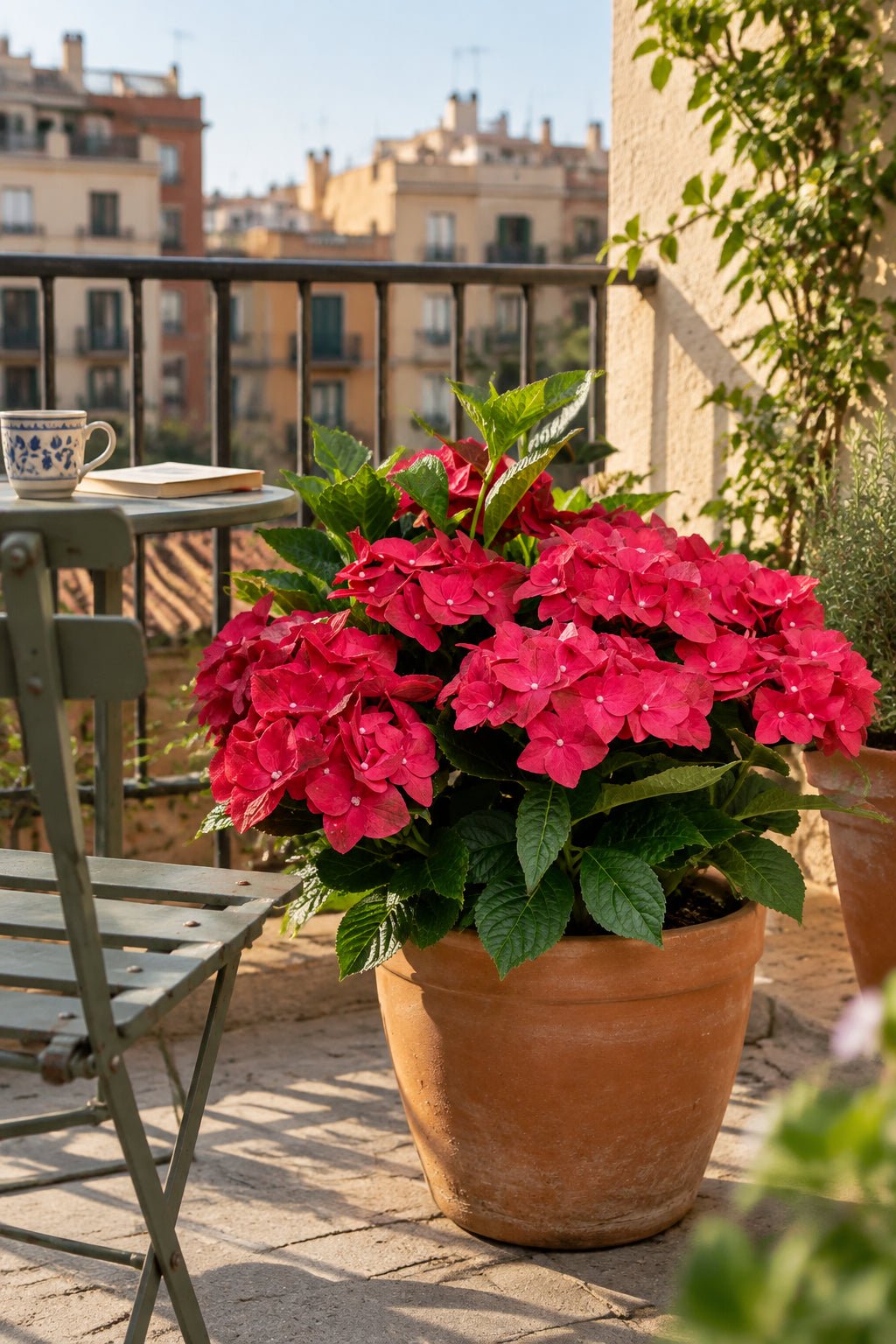
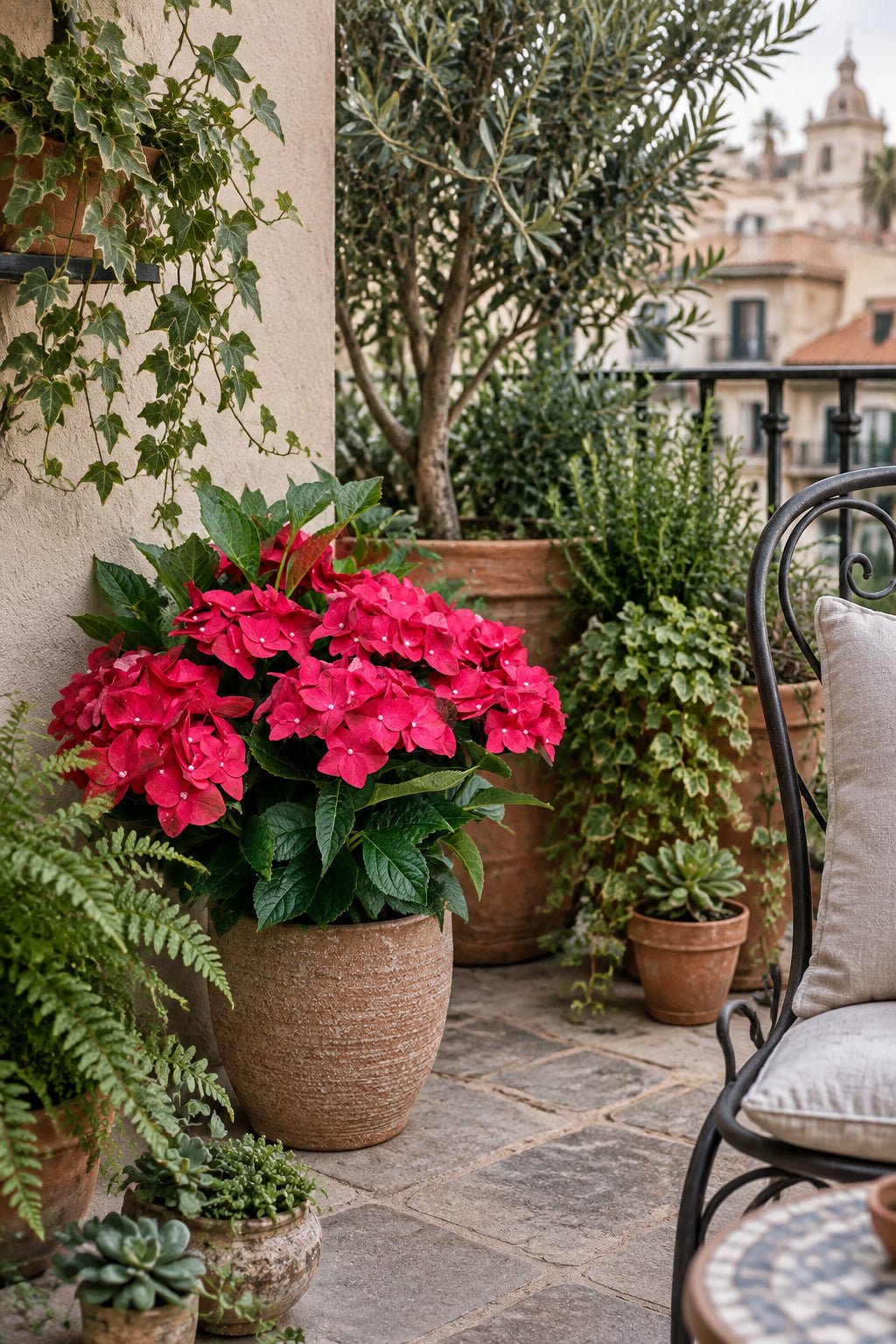
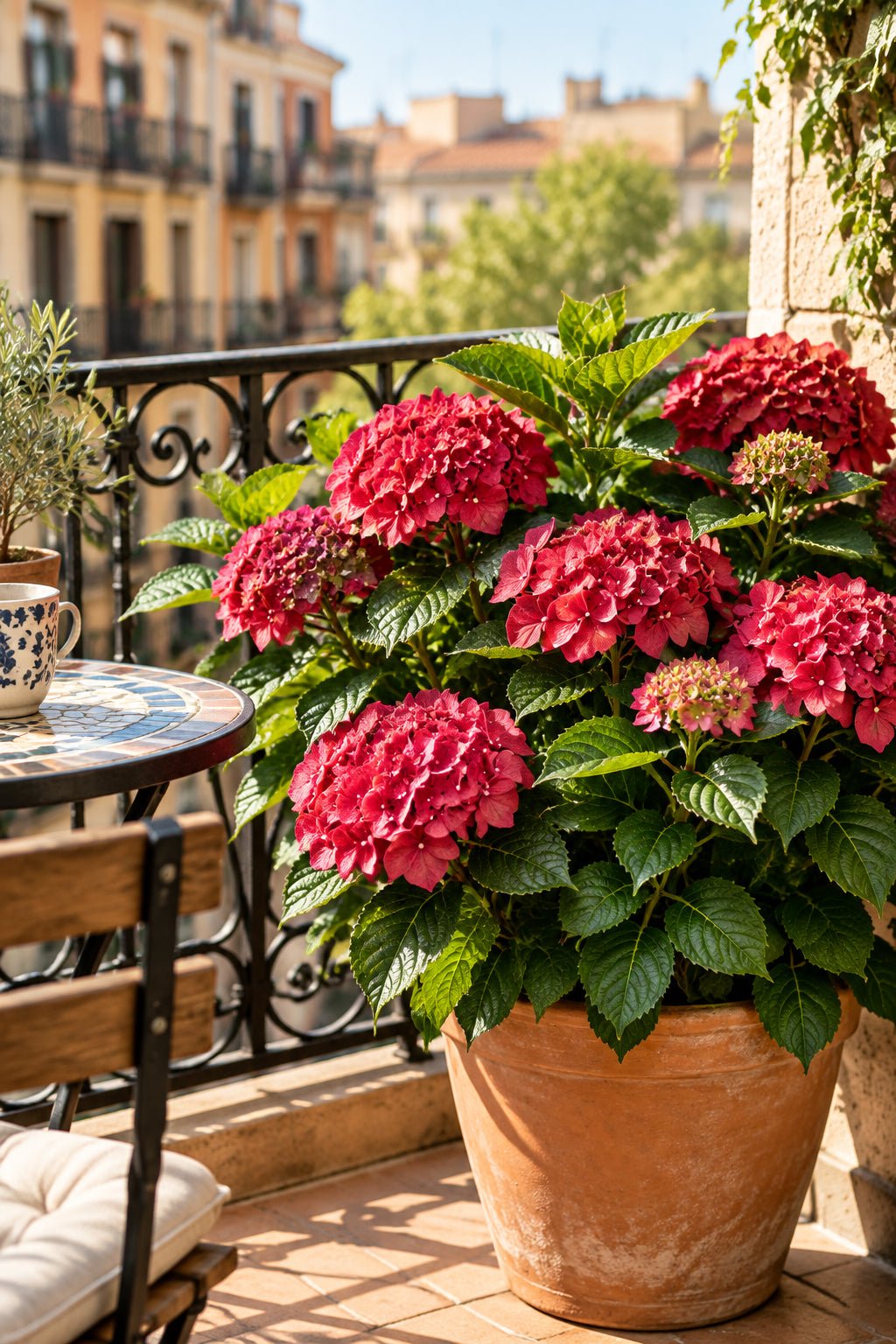

❤️ Deep red flower heads • 🎨 From green to red through the summer • 🏆 Award-winning variety • ⛅ Partial shade • ❄️ Hardy • 🪴 Compact growth, ideal in a pot
Hydrangea macrophylla Magical® Ruby Tuesday is the red hydrangea in the Magical® series, winner of the “Best New Garden Plant” award. A horticultural selection from Europe (the Netherlands), grown at the Kolster nursery, it is the deepest red among the flowering outdoor plants in the catalog, set against dark green foliage that makes it stand out.
Its flower heads open green at the start of flowering, become tinged with red while retaining a few green details, then turn an intense, deep red in midsummer. Delivered 55 cm tall in a 23 cm pot with 6 to 10 flower heads, it remains compact and handles both sun and rain equally well.
Which hydrangea should you choose?
The Hydrangea plants in the catalog do not have the same flowering or uses:
- Magical® Ruby Tuesday (this plant) — from green to deep red. The deepest red of the series.
- Forever & Ever® — repeat-flowering: it blooms again on the current year's shoots, even after a harsh winter or an unsuccessful pruning. The safest choice for flowering every year.
- Magical® Revolution — flowers that change color from July to October, a variety awarded by the Royal Horticultural Society. Most spectacular in late summer.
- Magical® Jewel — starts lime green and finishes deep purple-red. The most contrasting of the series.
- Magical® Greenfire — pink flamed with green. Most tolerant of full sun.
- Magical® Noblesse — almond green, then pure white, then bright green. Best suited to shade.
- 'Pink Annabelle' — Hydrangea arborescens with large flower heads on sturdy stems, to be cut back hard every winter. The hardiest.
- Hydrangea petiolaris — the only climber, for covering a wall in the shade.
Light & location
Ruby Tuesday tolerates sun better than most hydrangeas, but its red remains deepest and the flowers last longest in partial shade.
- Exposure: ideally partial shade, morning sun tolerated.
- Location: patio, balcony, entrance, in front of a light-colored wall that makes the red stand out.
- Hardiness in a pot: hardy — a winter fleece during severe cold protects the buds.
- Soil type: moist, rich, neutral to slightly calcareous — this is what preserves the red color.
In acidic soil, the red gradually shifts toward purple: neutral compost preserves the original color.
Watering & care
Like all hydrangeas, it uses a lot of water in summer: an absence of a few days requires preparation, and browning leaf edges signal a substrate that is too dry.
- Watering: thoroughly and regularly — the substrate should remain moist, every two to three days in summer.
- Water: tap water is suitable — the limescale helps maintain the red color.
- Fertilizer: fertilizer for flowering plants, three to four times during flowering.
- Pruning: remove faded flowers in March, just above the first pair of buds.
- Repotting: into a wider pot the following spring, using compost for flowering plants.
Keep the flowers in place until March: when dry, they take on burgundy tones and protect the buds from the cold.
Decor ideas & plant combinations
Such an intense red catches the eye from a distance and pairs beautifully with whites and delicate foliage, especially on a partially shaded balcony where it adds depth.
- For a striking contrast, pair it with Hydrangea 'Strong Annabelle' — the same exposure, the same water requirements, and the pure white makes the red look even more vivid.
- For a color echo, place a Photinia 'Little Red Robin' standard behind it — its young red shoots pick up the color of the flowers higher up and remain evergreen in winter.
- To dress the base, plant a Carex 'Ice Dance' at the edge of the pot — its cream edging brings light beneath the dark pompons.
- To enhance the pot, choose the Capi Nature Skin anthracite pot — the dark gray gives the red a depth that terracotta, too close in tone, would stifle.
Cut at the end of summer, the red pompons dry very well in a vase without water and retain a burgundy hue for several months.
Verdeia tips
- Keep the soil neutral: in ericaceous soil, the hydrangea absorbs aluminum from the soil and the red turns violet. Potting soil for flowering plants and tap water preserve the original color.
- Feed it during flowering: three to four applications of fertilizer for flowering plants between June and August maintain the intensity of the red.
- Protect it in severe cold: in a pot, winter fleece during prolonged frosts protects the buds. If the leaves have suffered after a frost, here is how to save a plant that has been affected by cold.
Technical specifications
- Botanical name: Hydrangea macrophylla Magical® Ruby Tuesday
- Common name: Red hydrangea with color-changing flowers
- Family: Hydrangeaceae
- Origin: horticultural selection from Europe (the Netherlands)
- Dimensions on delivery: H55 cm | Pot Ø23 cm, 6 to 10 flower heads
- Habit: bushy, compact
- Mature height: approximately 1 m
- Flowering: long-lasting, from green to intense red
- Exposure: partial shade, morning sun tolerated
- Watering: generous and regular during the season
- Soil type: moist, rich, neutral to slightly calcareous
- Hardiness: hardy, winter fleece recommended in severe cold
- Foliage: deciduous, dark green
- Care: easy
- Toxicity: toxic to animals and children if ingested
- Decorative style: Country / Romantic / Patio
- Distinction: “Best New Garden Plant” award
Each plant is unique: the number of flower heads and the color stage at delivery naturally vary according to the season and growing conditions.

Your plant, delivered with care
Every plant is hand-packed in a box specially designed for plants — secured, protected, ready to travel. It arrives in perfect condition, roots intact and foliage preserved, ready to take its place in your home.
Our Verdeia commitments
FAQ – Everything to know before adopting your Verdeia plant
How are my plants prepared before shipping?
All our plants are selected from our European partner nurseries. Before shipping, they are watered, cleaned, and protected with breathable, secure packaging. Each package is designed to ensure your plant arrives in perfect health, without any transport-related stress.
Will the plant look exactly like the photo?
The photos accurately represent the variety and the stated size. Since each plant is unique, slight differences in shape, foliage, or color may occur — and that’s part of their charm.
What are the delivery times and conditions?
Orders ship within 48 working hours, with tracked delivery in 2 to 5 working days via DPD. Shipping costs and the free-shipping threshold depend on your country — see our delivery page. You receive a tracking link as soon as your parcel leaves.
What should I do when my plant arrives?
Open your package as soon as you receive it and carefully remove the plant from its packaging. Let it acclimate for 24 hours in its new environment before watering. If it has been slightly stressed during transport, it will recover its shape after one or two days in the light.
What should I do if my plant arrives damaged?
Contact us within 48 hours with a photo of the issue. Our team will assess the situation and offer you the best solution: replacement, partial refund, or recovery advice.
Can I return a plant?
Since plants are living beings, standard returns are not possible. However, we guarantee good health upon delivery: if the plant arrives damaged, it will be replaced free of charge. For any other cases (order error, decorative pot, accessory), returns are possible within 14 days.